Key Summary:
- The Lee Jae Myung administration’s North Korea policy, centered on the “Exchange, Normalization, and Denuclearization” (E.N.D.) Initiative, seeks a pragmatic return to dialogue and peaceful coexistence.
- While the initiative attempts to break the cycle of failed denuclearization-first talks by prioritizing low-level engagement, the current geopolitical environment and North Korea’s – drastically altered by North Korea’s strategic alignment with Russia – presents profound challenges that outweigh the current opportunities.
Introduction
With the “Exchange, Normalization, and Denuclearization” (E.N.D.) initiative, the Lee Jae Myung administration has articulated a return to an engagement-focused policy on North Korea. While seeking to resume dialogue and establish peaceful coexistence through a pragmatic, phased process, the approach faces a number of formidable challenges. Against the background of a very different geopolitical environment, most notably the deepened US-China conflict, Russia’s war against Ukraine, and the strategic partnership between Moscow and Pyongyang, Lee Jae Myung faces a very different North Korea compared to the previous case of inter-Korean engagement in 2018/2019. Rooted in the unsuccessful Hanoi summit, which was much more than a failed diplomatic initiative for North Korea, Pyongyang made comprehensive changes in its foreign policy strategy, significantly increased its military capabilities, revised its nuclear doctrine, and severed most dialogue channels with the U.S. and its allies. This formal shift in doctrine directly or indirectly challenges all three aspects of the E.N.D. initiative. XYZ.
Facing a different North Korea
President Lee Jae Myung today faces a very different North Korea than his predecessors. The roots of these changes lie in the failed Hanoi summit, which was much more than a failed diplomatic initiative to North Korea. In fact, the failed Hanoi summit marked a critical juncture that triggered a comprehensive revision of the country’s foreign and security policy. Domestically, this change was facilitated by the COVID-19 pandemic. Since January 2020, North Korea has used the pandemic as justification for a strict national lockdown, which has restricted border traffic and mobility within the country (including for international representatives) and hampered humanitarian and civil society exchanges. The first cross-border trade with China and Russia did not resume until 2022, with direct exchanges with Beijing and Moscow beginning in 2023. In the course of the Covid lockdown, North Korea proved itself to be very resilient, surviving the near-complete shut-off from the international community, thus emerging empowered from this experience.
First, North Korea comprehensively revised its foreign policy. This revision was characterized by the (at least temporary) abandonment of the goal of normalizing relations with the US through denuclearization talks and the exploitation of the associated economic opportunities, such as the easing of sanctions. Instead of the hoped-for rapprochement, Pyongyang ended its 17-month moratorium on missile tests, decoupled from wide parts of the international community, while focusing on a selective re-engagement with China and especially Russia. A particular concerning aspect of this revision was the designation of South Korea as an enemy state and the subsequent abandonment of the goal of unification, thus effectively ending the long-standing basic principles that have underpinned North Korea’s approach to the ROK in the past.
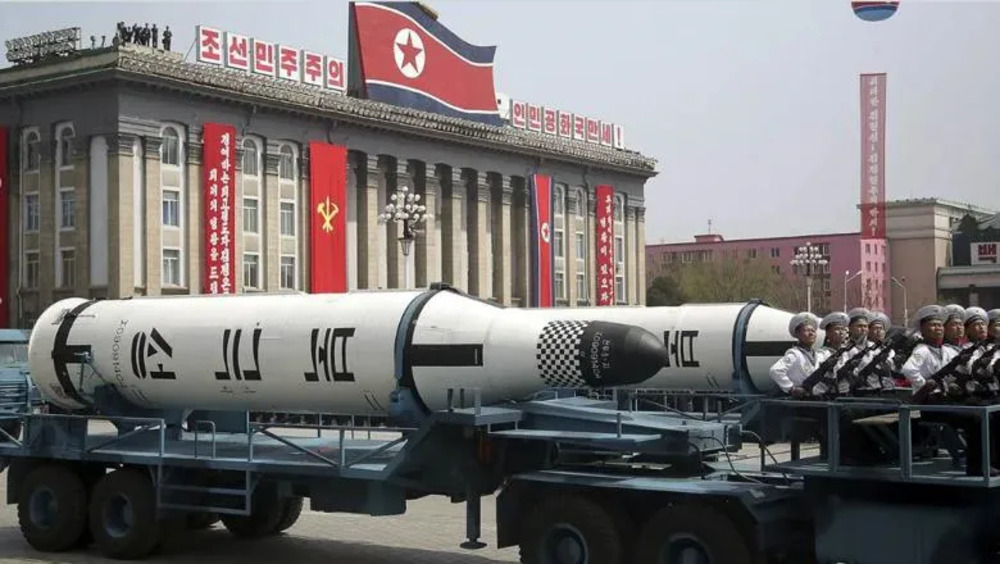
Second, North Korea has significantly increased its military capabilities since 2018/2019. In January 2021, Kim Jong Un announced a comprehensive military build-up and upgrade in line with the five-year plan; 2022 then saw the highest number of missile tests to date. The five-year plan describes the current and future development and deployment of a range of nuclear weapons systems capable of reaching targets in South Korea, Japan, Guam, Hawaii, and the US mainland. North Korea first tested intercontinental ballistic missiles in 2017 and added new models to its arsenal in the previous years. Pyongyang has also presented various medium-range missile systems that can be stored on ships or submarines and launched from there. According to Kim Jong Un’s statements in 2023, the “nuclearization” of the navy will receive special attention in the further implementation of the military buildup plan. Short-range missile systems have not only been tested and developed many times, but have also been emphasized in North Korea's production increase, along with matching nuclear warheads and medium-range missile systems.
Third, North Korea revised its nuclear posture. In January 2021, Kim Jong Un mentioned “tactical nuclear weapons” for the first time, reinforcing fears of an escalatory deterrence doctrine. The 2022 Nuclear Law highlights both the low threshold and willingness to use nuclear weapons, as well as the threat of a “preemptive” first strike at the first sign of an imminent enemy attack. As this nuclear strategy requires extensive military reconnaissance capabilities, North Korea is attempting to improve these capabilities by expanding its satellite and drone programs. The doctrine explicitly states that nuclear weapons will only be used against enemy states – making the above-mentioned designation of the ROK as an enemy particularly concerning.
Fourth, the Lee Jae Myung administration’s E.N.D. initiative operates in a very different geopolitical environment, marked by an increased strategic conflict between the US and China and Russia’s war against Ukraine. This has significantly increased Pyongyang’s strategic importance for both Moscow and Beijing, thus strengthening Pyongyang’s strategic position. In specific, Russia’s war of aggression in Ukraine offers North Korea unprecedented opportunities for expanded and public cooperation. The large-scale export of artillery shells, short-range ballistic missiles, and launch vehicles not only brings Pyongyang important revenue, but also information about the use of its systems on the battlefield. In addition, closer cooperation with Moscow also helps North Korea to alleviate its chronic food and energy shortages and, in the long term, at least somewhat reduce its excessive economic dependence on China. Arguably the most vivid culmination of this development is the formalization of a strategic partnership treaty between Russia and North Korea.
Fifth, in line with the revision of its foreign and security policy strategy, North Korea severed most communication channels with the US and especially South Korea, thus further complicating the implementation of an engagement policy vis-á-vis North Korea.
The Strategic Challenges for Lee Jae Myung’s Approach
The Lee Jae Myung administration faces a number of major strategic challenges in implementing its E.N.D. initiative.
North Korea’s Shift in Doctrine
Arguably the biggest obstacle is North Korea’s formal shift in doctrine, which is marked by an unwillingness and bolstered confidence to even engage in dialogue. As Pyongyang has redefined the ROK in terms of a “permanently hostile enemy state,” this shift frames the inter-Korean relationship as purely inter-state and confrontational. As such North Korea is refusing to re-establish communication channels with the ROK, which directly challenges the “exchange” and especially the “normalization” components of the E.N.D. initiative, while North Korea’s view of its nuclear arsenal as non-negotiable and essential to its survival challenges the initiative’s “denuclearization” component.
North Korea’s Direct Link to the Trump Administration and the Weak Dyadic Dynamics of Inter-Korean Relations
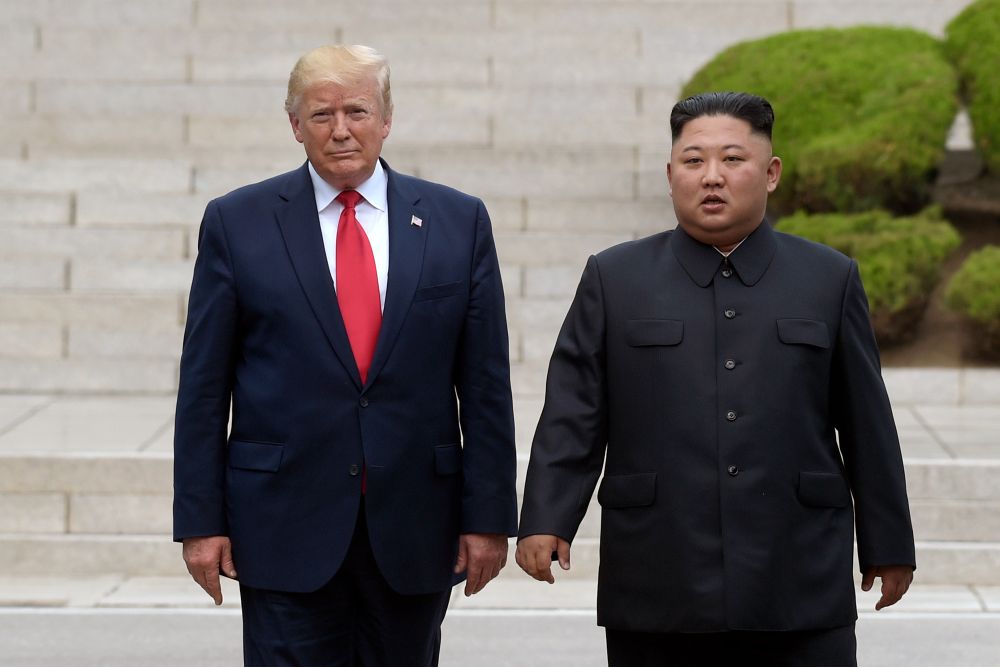
Unlike in 2018/ 2019, when North Korea needed South Korea to re-engage with the US, today, with Trump back in office, North Korea could use direct channels to the Trump administration without going through South Korea. On the one hand, the Lee approach recognizes the fact that any solution to the North Korea issue requires the support of the US. His statement of South Korea as the pacemaker and the US as the peacemaker is a reflection of this fact. On the other hand, however, the approach makes inter-Korean relations even more dependent on the US., thus further weakening the dyadic development dynamics of the South Korea-North Korea relations. Moreover, even if a direct dialogue between Trump and Kim should resume, there is no guarantee that South Korean interests will be sufficiently taken into account in this case. Furthermore, the outcome of the Hanoi summit teaches us that such a renewed summit could also be a case of “be careful what you wish for,” because it was ultimately the failed Hanoi summit that triggered North Korea’s strategic reversal discussed above.
Shrinking International Support
Another challenge for the Lee administration’s North Korea approach is the fact that there will be less international support for these policies, especially from Europe. In fact, Europe, in particular, has less appetite for engagement with North Korea, especially due to its support of Russia’s war against Ukraine. While Europe has repeatedly functioned as a facilitator of dialogue in the past, thus bringing the major parties of the conflict together (such as in Sweden in January and October 2019), most of the dialogue channels between Europe and North Korea have been severed by North Korea. Additionally, European countries have closed their embassies in Pyongyang in 2020 and only a very few (slowly) are currently in the process of resuming operation there.
Lack of Leverage
Without a convincing mechanism to bring North Korea back to the negotiation table, the E.N.D. initiative lacks concrete leverage to compel Kim Jong Un to recalculate his strategy on South Korea. Most notably, South Korea’s greatest source of leverage in the past – North Korea’s economic isolation – has been lost due to the DPRK’s closer cooperation with China and especially Russia. As such, North Korea has achieved a long-sought strategic goal of at least partially balancing its (over-)reliance on China with a renewed, beneficial relationship with Russia.
Outlook
Given the severe strategic headwinds, any success for the E.N.D. initiative in the short term will likely be limited to risk management rather than substantial progress on the core goals. As such, one of the most immediate and realistic goals is the restoration of and maintenance of emergency military hotlines to prevent accidental conflicts and unwanted escalations. This would address the acute risk that Lee himself has identified and is vital for stability on the Korean peninsula – even it would fall short of true exchange or normalization. Moreover, the more recent signaling from the Lee administration suggests a further softening of the language, prioritizing the “institutionalization of peaceful coexistence” and a “Korean peninsula without war or nuclear weapons” over explicit “denuclearization.” This adjustment allows Lee to maintain the vision of E.N.D. while acknowledging the current reality of two hostile states, which may be helping to manage expectations. In the meantime, it is crucial that South Korea focuses on strengthening the dyadic development dynamics of inter-Korean relations, that is, reducing the immediate dependence of the relationship between South and North Korea on the US. This requires greater continuity in South Korea’s approach to inter-Korean relations, which might be seen as the basic problem of South Korea’s approach to the North. If there is anything to be learned from the case of Germany, it is that stability in and continuity of Germany’s Ostpolitik beyond changes of government was crucial to its successes.
Dr. Eric J. Ballbach serves as Korea Foundation Fellow at the Asia Research Division of the German Institute for International and Security Affairs (Stiftung Wissenschaft und Politik, SWP) in Berlin. He previously served as director of the Research Unit “North Korea and International Security” at Freie Universität Berlin’s Institute of Korean Studies. Dr. Ballbach’s research focuses on North and South Korean foreign and security policies, in particular EU-Korea relations, the sanctions regime(s) against North Korea, and North Korea’s participation in international organizations. He advises the German government, the EU and NATO on Korea-related issues, and has testified before European Parliament and the German Bundestag. He previously participated in numerous informal Track-1.5 initiatives involving high-ranking representatives from the DPRK, the ROK and the US. Dr. Ballbach is regularly consulted by national and international media outlets on current developments on the Korean Peninsula and the Indo-Pacific. Among his more recent publications are: -- South Korea’s Deterrence Strategy [in German], in: SIRIUS – Journal for Strategic Analyses, November 2025, https://www.degruyterbrill.com/document/doi/10.1515/sirius-2025-2016/html // South Korea’s Ever-Closer Relations with NATO: Intersecting and Varying Motives of South Korea’s Moon Jae-in and Yoon Suk-yeol Administrations, SWP Comment 2025/C 04, January 21, 2025, https://www.swp-berlin.org/publikation/south-koreas-ever-closer-relations-with-nato // South Korea’s Evolving Indo-Pacific Strategies: Opportunities and Challenges for Cooperation with the EU, SWP Research Paper 2023/RP 02, German Institute for International and Security Affairs, March 2023, https://www.swp-berlin.org/publications/products/research_papers/2023RP02_SouthKorea_IndoPacificStrategy.pdf // Sanctions against North Korea: From UN Security Council to a Coalition of the Willing?, GCSP Policy Brief, Geneva Center for Security Policy, January 11, 2024, https://www.gcsp.ch/publications/sanctions-against-north-korea-un-security-council-coalition-willing // Anjŏnhan konggŭmmangŭl wihan elbŭi chŏllyakkwa taehanmin’gugŭi yŏkhal (The EU’s Strategy for Stable Supply Chains and the Role of South Korea) in: T’ongilgwa tamnon (Unification and Discourse), National Institute for Unification Education, Fall/Winter 2023, https://www.uniedu.go.kr/uniedu/atchfile/down/F000126677.pdf