
Key Takeaways:
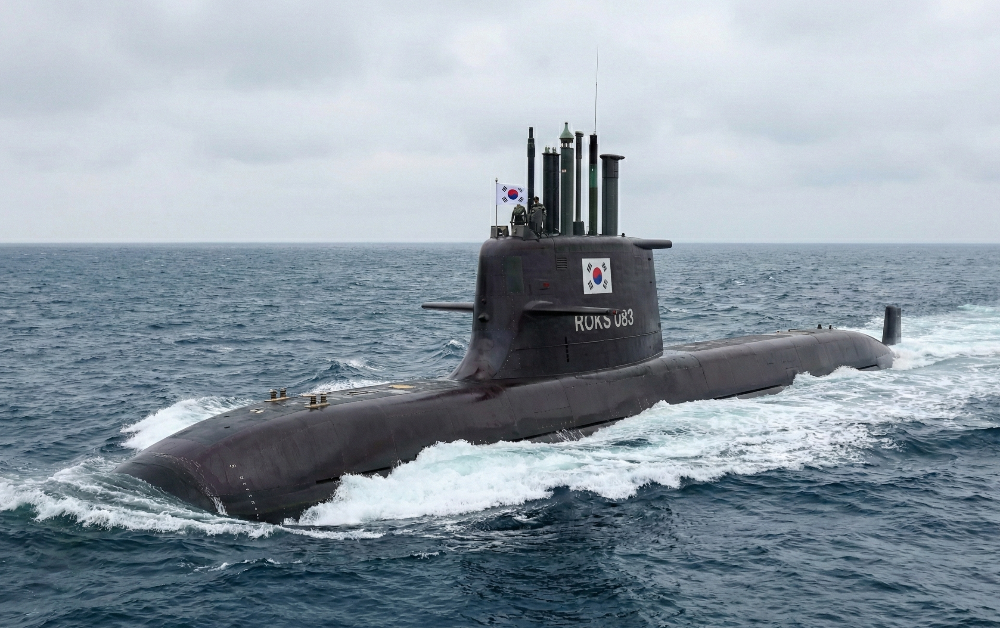
- Integration over Autonomy: While South Korea views acquiring nuclear-propelled submarines (SSNs) as a path to strategic autonomy, the U.S. intends to use the deal to deepen industrial integration and leverage Korean shipbuilding capacity to support the American defense base, mirroring the AUKUS model.
- Expanding Regional Security: The Trump administration views the provision of SSN technology as a "downpayment" that obligates South Korea to expand its military footprint beyond the Peninsula and participate actively in broader Indo-Pacific deterrence against China.
- Strategic Alignment Gap: Unlike Australia's clear maritime role under AUKUS, South Korea currently lacks a proven strategic framework for deploying SSNs regionally, creating a risk of a significant "expectation gap" between Washington's demands for a global ROK navy and Seoul's traditional focus on North Korea.
Introduction
US
President Donald Trump’s promise to assist the Republic of Korea (ROK) in
acquiring nuclear-propelled submarines (SSNs) caused much excitement around the
region, including in Australia. The ‘deal’ was notable for several reasons, not
least because it was announced at the same time as the fate of another SSN deal
– that with Australia through the AUKUS pact – hung in the balance. However, now
it seems that the tables have turned. While AUKUS is ‘full
steam ahead’, there are growing questions about the scope and requirements
of a potential US-ROK SSN arrangement, including where such a deal might fit
with South Korea’s wider role with respect to Indo-Pacific security.
Rather
than providing an industrial roadmap to be emulated, AUKUS instead offers broad
lessons for the ROK about the key industrial, political and strategic drivers
of US interest in such an arrangement. Indeed, as the White House’s new National
Security Strategy makes clear, nothing comes cost-free for allies from the
Trump administration. In that respect, AUKUS shows that US assistance with
allied SSN aspirations, whatever that may ultimately look like, is about more
than allies owning their security burdens. Just as it has with Canberra,
Washington will expect Seoul to integrate more deeply with the US defence
industrial base to support American military requirements, and to align more
deeply on regional defence strategic priorities, meaning that negotiations between
the US and the ROK over a potential SSN deal cannot be separated from
Washington’s growing pressure to retool the alliance for deterrence vis-à-vis
China and the First Island Chain.
Integration
over autonomy
Firstly,
whatever form the US-ROK submarine deal takes, it will almost certainly require
a greater degree of integration between Washington and Seoul on defence
industrial policy. This will have clear implications for South Korea’s sense –
if not its reality – of ‘strategic autonomy’, essentially a shorthand for
greater South Korean agency in managing its own strategic affairs on the Korean
Peninsula in a way that reduces the necessity, and therefore influence, of US
military and political assistance. In fact, several ROK leaders have already
explicitly framed the as a means to enhance Seoul’s strategic autonomy, casting
the ‘deal’ as shifting the burden of defence on the Korean Peninsula off of the
United States. They have also insisted
that the ROK should produce the submarines on its own shipyards with only
minimal US support on matters of nuclear fuel, a position at odds with
President Trump’s original indication that the SSNs would be built in America.
Yet
it’s just as likely that a US-ROK SSN deal will further entwine the two
countries on a deeper level. The US increasingly sees Korea as a valuable
source of naval maintenance capacity
to meet in-region sustainment requirements for US forces, and as a source
of capital for expanding America’s own shipbuilding capacity at home. In
that respect, it’s no coincidence that there have already been reports
of a formal co-production arrangement that would see ROK SSNs co-produced in US
and Korean shipyards. This would be consistent with a broader trend whereby
defence industrial and technology integration has become ground zero for US alliance
modernisation agenda in Asia, including with South Korea (though the US-ROK
alliance has lagged compared to others until now), efforts premised on deeper
defence industrial integration at the policy and regulatory level to support regional
strategic objectives and to offset major weaknesses in the US defence
industrial base, including on submarine production.
While
the details of a prospective US-ROK deal remain forthcoming, the good news for
Seoul is that autonomy and integration are not mutually exclusive. If anything,
Australia’s experience through AUKUS suggests that they can be mutually
reinforcing. On the one hand, AUKUS has been cast in in terms of bolstering
Australia’s capacity to manage its own security affairs, and is consistent with
the 2024
National Defence Strategy’s commitment to enhancing Australia’s capacity to
deliver independent military effects in its near region. At the same time, Australia
recognises that the success of AUKUS is contingent upon deeper defence
industrial and technology integration with the United States, including the
harmonisation of defence trade controls, foreign investment screening and
security clearance processes; workforce sharing and training; large Australian
investments in all three AUKUS countries’ defence industrial bases; and a range
of other initiatives aimed at strengthening the combined submarine industrial
base of all three countries. While all of these measures will strengthen
Australia’s own defence capability and industrial capacity, they will also support
America’s long-term strategic position in Asia – another core objective of
Australian strategy.
Of
course, a US-ROK SSN arrangement would not perfectly mirror AUKUS given clear
differences between the two alliances, not least Australia’s preexisting status
as a part of the legal definition of the US defence industrial base and
membership in the Five Eyes intelligence-sharing arrangement, and South Korea’s
comparatively mature submarine industrial base and proven defence production
capacity. Yet present trends suggest that the United States will be seeking an
agreement that contributes to its defence industrial vitality and, ideally,
shores up its wider regional position. In that respect, arguments that the ROK will
be helping to meet US objectives simply by becoming more ‘autonomous’ are
unlikely to gain sufficient traction with an administration seeking to leverage
alliance integration to support ‘America First’ policy objectives.
Transforming
the alliance and the ROK’s regional role
Relatedly,
discussions over a potential SSN deal cannot be separated from ongoing debates
within and between the United States and South Korea over how to expand the
alliance’s strategic aperture. In basic terms, while South Korean policymakers primarily
seem to view the utility of SSNs vis-à-vis priorities on and around the
Peninsula, evidence suggests that the Trump administration would see cooperation
on these assets as a downpayment on a more active Korean contribution to
regional security beyond the confines of Northeast Asia. It's no coincidence
that the submarine issue has surfaced in the midst of a wider discussion not
only about cost-sharing arrangements for US Forces Korea (USFK) Peninsula and the
numbers and types of forces stationed there, but increasingly about how US and South
Korean forces stationed on the Peninsula should play a more prominent role in
wider regional security. In other words, Seoul’s strategic intent is just as
important a factor to Washington as the SSN capability itself.
To be sure, this is not a new debate. In recent years, successive Commanders of
USFK have sought to underscore
the off-Peninsula utility of USFK and the US-ROK alliance more broadly, yet
South Korean policymakers have historically resisted[TC1]
overtures for greater ‘strategic flexibility’ for USFK, let alone Korean forces.
However, US military leaders have upped the pressure in the wake of the
submarine ‘deal’. In November, US Forces Korea Commander Xavier Brunson published
an ‘East-Up
Map’ highlighting how allied forces on the Peninsula were already
"capable of immediate cost-imposition against multiple adversaries,"
not just North Korea, and positing the Peninsula as part of "a strategic
triangle connecting Korea, Japan, and the Philippines" with respect to the
First Island Chain, a geographic construct linking Northeast Asia, the Taiwan
Strait, and the South China Sea. That same month, US Chief of Naval Operations
Daryl Caudle stated
in no uncertain terms that "there will be a responsibility for Korea to
deploy those submarines globally and move away from just being a regional navy
to a global navy,” and highlighted the “natural” role that prospective ROK SSNs
would have in countering China’s region-wide maritime activities.
The basic
implication of these statements is that Washington will expect the ROK to
employ its naval forces, including SSNs, for missions away from the Korean
Peninsula. Yet the ROK’s own operational and strategic logic for doing so
remains unclear. Operationally, while ROK SSNs would be useful in countering
North Korea’s own emerging subsurface fleet – including nuclear-powered and
nuclear-armed submarines– their value in monitoring Chinese activities in the East
and West Seas is far less convincing given the shallow depths of those waters. Strategically,
successive Korean administrations have
pledged
to play a more prominent security role across Asia, yet there is relatively
little evidence to suggest that South Korea is actually doing so in ways that
would benefit from the capabilities that SSNs would provide. Even the
relatively modest goal of deploying counter-piracy units to the region
articulated under the previous government’s Indo-Pacific Strategy has gone
unrealised.
That President
Lee Jae-myung reportedly cited both North Korean and Chinese threats in
pressing South Korea’s case in his pre-announcement meeting with President
Trump was striking, but whether or not his administration means to follow
through on those sentiments remains to be seen. Indeed, neither of Seoul’s
operational nor strategic cases for SSN acquisition are likely to be sufficient
to satisfy Washington’s questions over the remit of the US-ROK alliance and/or
the ROK Navy’s regional footprint. This contrasts with AUKUS, where Australia’s
operational requirements for SSNs are more widely accepted given the country’s
extensive maritime geography, and where Canberra has frequently
demonstrated
its willingness
to employ defence assets in support of collective deterrence operations across
the First Island Chain, even before AUKUS was announced in September 2021.
Importantly for South Korean stakeholders, AUKUS is not premised on a political precommitment by any party – including Australia – to any specific regional contingency. Though questions have been raised about specific contingencies where Australian SSNs could be employed against Chinese forces including in prospective Taiwan scenarios, in actuality these are discussions about alliance planning and strategic and operational alignment rather than about the terms and conditions of the AUKUS program itself. Likewise, South Korea should not expect, nor be expected, to pre-commit to hypothetical conflict scenarios over the Taiwan Strait or the South China Sea in exchange for assistance with SSN. But it will almost certainly be expected to contribute more consistently and more visibly to peacetime maritime deterrence missions across the wider region. In any case, resolving these broader alliance debates concurrently with the prospective SSN arrangement will be essential if the allies are to avoid the risk of widening, rather than narrowing, an already sizable expectation gap between the two countries over the mid- to long-term, even if a quick deal would meet short-term industrial and political needs.
Tom Corben is a Research Fellow in the Foreign Policy and Defence Program at the United States Studies Centre, where he works on US Indo-Pacific Strategy, regional strategic dynamics, defence industry and technology issues, and alliance modernisation trends.