Key Takeaways:
- Trump’s potential 2026 meeting with Kim Jong Un—either en route from Beijing in April or at the Shenzhen APEC Summit—could reopen diplomatic space after a year of stalled U.S.–DPRK engagement and rising North Korean alignment with Russia and China.
- Although denuclearization is off the table, Trump could still pursue a historic peace declaration among the Korean War belligerents, creating a framework for arms control, limited nuclear caps, and broader normalization.
- With North Korea increasingly wary of dependence on Beijing and Moscow, Seoul may ultimately be Kim’s most reliable long-term partner—giving Trump a narrow window to reshape Korean Peninsula dynamics before U.S. political constraints tighten after late 2026.
President Trump did not meet Kim
Jong Un last October after his summit with China’s President Xi Jinping in
South Korea. Both Trump and Kim likely wanted to avoid upstaging the summit
with Xi at that time. However, in April 2026 Trump will make a state visit to
Beijing and has the opportunity to meet Kim on the way home. Trump may also attend
November’s APEC Summit in Shenzhen, China - another opportunity to meet the
North Korean leader. But Kim could also sense that Trump, based on their
2018-19 experience and current lack of clarity in U.S. North Korea policy, is
less reliable than Putin or Xi, and may not respond to pleas by the Trump
administration to meet next year.
It was unrealistic to expect that
either Trump or Kim would have scheduled an October meeting on the heels of
Trump’s first summit in his second term with Xi. Kim, especially, was likely
highly sensitive to any appearance of distracting from the importance of
Trump’s summit with Xi, especially after Kim attended the Sept. 3 victory
parade in Beijing.
At the same time, efforts by the
second Trump administration to reach out to North Korea have been reportedly rebuffed
with an apparent lack of any engagement. It may be that Kim Jong Un has no
reason to meet Trump again, unless Trump states his willingness to, in some way,
recognize North Korea as indeed a nuclear power. In late 2025, it does not
appear Trump is willing to make such an acknowledgment, for many reasons.
Throughout the first year of his
second term, Trump has endeavored to be seen as not just a dealmaker, but as a
peacemaker, claiming he has brokered peace in at least eight different
geographical conflicts, and repeatedly argues he deserves the Nobel Peace Prize.
It remains to be seen whether he
can bring about a lasting ceasefire and settlement in the war in Ukraine and whether
that would endanger NATO members bordering Russia. In the war in Gaza, Trump
successfully brokered a ceasefire with the support of over 20 world leaders in
Egypt, albeit a ceasefire in which Israel retained the leeway to interpret it
in ways it sees fit. Nonetheless, nearly all Israeli hostages or their remains
have been returned to Israel, and possibly later this month a new phase
focusing on establishing Palestinian governance in Gaza may commence.
It's debatable how effective Trump is
at brokering settlements and peace agreements overall in international
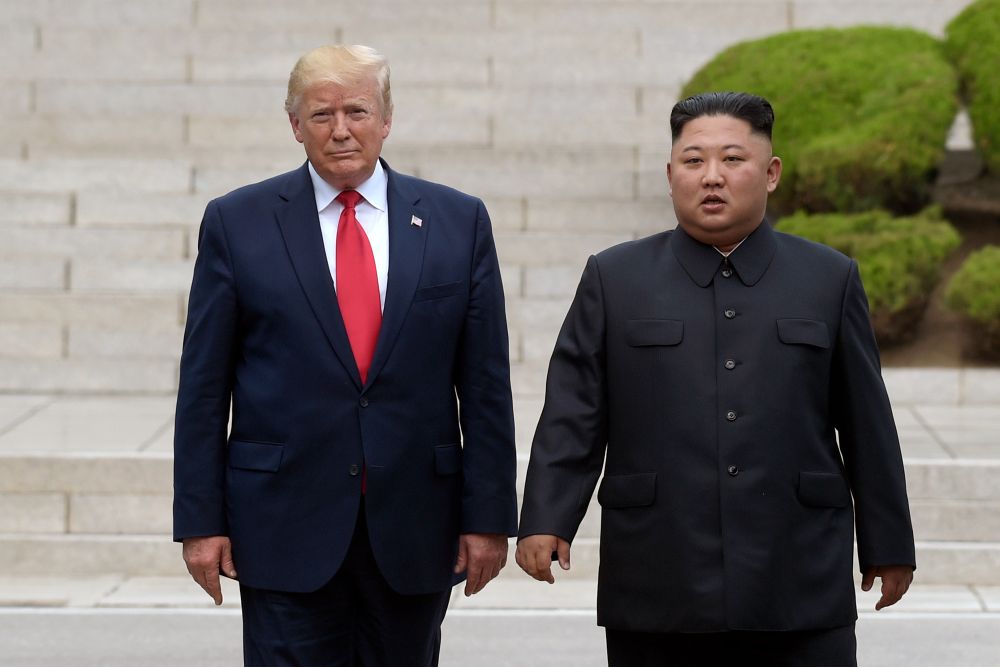
conflicts. Moreover, despite meeting Kim Jong Un three times in his first term,
Trump finds a wholly different situation in his second term, where North
Korea’s nuclear deterrent is considerably bolstered while his military alliance
with Russia seems to take precedence over his relations with any other country,
including China.
One trait Trump displays is an
ability to think out of the box in a way no other U.S. president would likely
have been able to consider. A good example is that Trump has embraced Syria’s
new interim president, Ahmed al-Sharaa, whose fighters
a year ago unexpectedly drove out the previous leader, Bashir Assad, to
eliminate a family regime that had ruled Syria for 54 years. Trump has embraced
al-Sharaa, despite his background as a former Al-Qaeda operative, which has
created a new beginning for Syria. Just weeks ago, al-Sharaa made an official
visit to the White House after Trump first met him earlier this year in Saudi
Arabia.
What this suggests is that in
certain situations Trump not only sees self-interested business opportunities but,
in some situations, also is unafraid to recognize the underlying and core
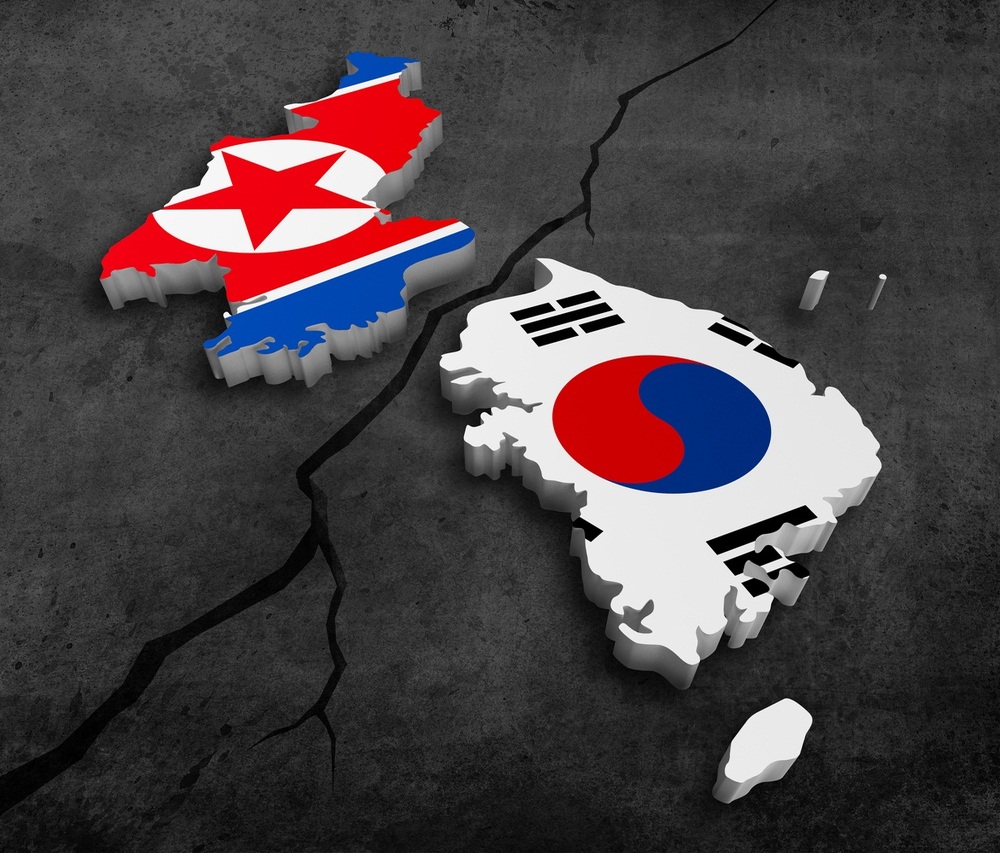
problem to be solved. In the case of the division of Korea, it’s possible that,
to some extent, Trump senses that the underlying causes of long-standing
tensions on the Korean Peninsula, which have lingered since the 1953 armistice,
can only be solved by setting in motion a process of declaring peace on the
Korean Peninsula that could end the technical state of war that has persisted
since 1950.
It's quite likely there is no way
Trump can get Kim Jong Un to denuclearize at this juncture in 2025-26. But if
he can more broadly get Kim Jong Un to agree to a historical document that
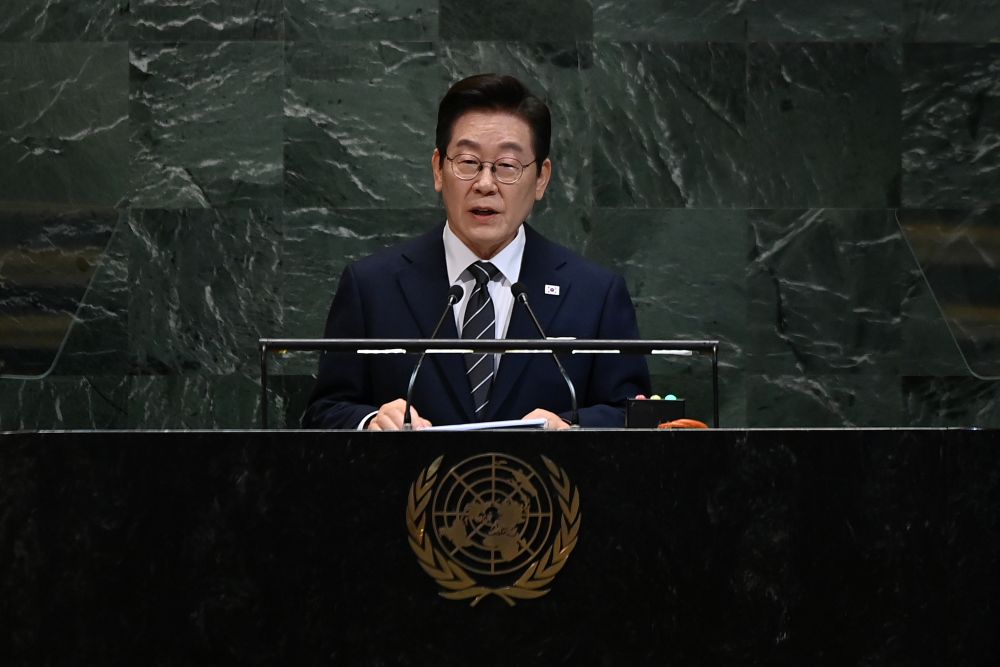
could also be signed by South Korean President Lee Jae Myung, as well as by
Trump and China’s President Xi (the belligerents in the Korean War), as well as
be endorsed by Russian President Putin, then Trump can achieve something
historic. In the specifics of that document, arms control provisions can be outlined,
and perhaps some sort of cap can be put on North Korea’s nuclear program, as
part of wider arms control measures.
Cleary, Kim Jong Un is now seeking
to become accepted as a normal member of the international community, albeit
one in which the North will maintain nuclear weapons for self-defense given it claims
it faces a hostile regional environment. But North Korea has sought normal
international relations with neighboring regions, such as Southeast Asia, and
nothing would be more dramatic for Kim than finally to normalize relations with
the United States so the long-held goal for mutual cross-recognition of both
Koreas by the major powers can finally take place.
There’s a deeper level that could
be recognized in North Korea’s current predicament. The DPRK has long held that
all of the major powers surrounding Korea are imperialistic, but the United
States is seen as the more benign of the imperialistic regional powers. In the
end, it remains necessary for North Korea to normalize relations with the
United States to offset the enormous pressure it feels from China, which would prefer
to integrate North Korea’s economy into that of China’s northeast and make the
DPRK more dependent, reducing North Korea’s sovereignty and independence.
Moreover, Kim knows the day will inevitably come when Putin’s Russia simply
walks away from North Korea and pretends the recent years of friendly and
productive relations are a thing of the past.
In the end, North Korea will be
left with a stark choice: it cannot depend on China alone, which retains
hegemonic ambitions towards North Korea; and it cannot depend on Russia, which
is never reluctant to throw an erstwhile ally under the bus when convenient. Increasingly,
Kim Jong Un must be concluding that the most reliable ally in Northeast Asia may
well be its own neighbor, South Korea.
This does not mean Kim needs to
alter his recent characterization of South Korea as just another country in the
region that is not part of Korea as he defines it. But it does mean that, in
the end, the most dependable long-term ally may in fact be a strong South Korea
willing to engage in increasingly cooperative activities and exchanges with the
North while acknowledging North Korea’s independence and sovereignty as a state
in the international system. Underpinning that relationship would be the DPRK’s
acceptance that its most reliable ally are the Korean people in the South.
The best contribution President
Trump can make in Northeast Asia is to solve the problem of the division of
Korea that led to the Korean War, and the Armistice that persists far longer
than ever intended. Trump should lay the groundwork for the end of the
technical state of war on the peninsula and lay the basis for the beginnings of
cooperation that he himself can preside over.
Whatever we may think of President
Trump, it should be acknowledged that as the head of the world’s leading
economy and most powerful military, he retains the power to convene, to
persuade, and to seal deals with the full authority of the United States. If
Trump indeed has a fundamental understanding of the core problem that has led
to 80 years of division of the Korean people, then that implies no future U.S.
president may be able to enact the changes that history requires at this time.
Next April may be the optimal time to make this happen, especially if President Lee can meet first with China’s President Xi, and if there is meaningful progress in halting the war in Ukraine. April may create a historical opportunity for out of the box diplomacy, that may not unfold in a straight line at the onset but still lay the foundation to bear fruit in the months and years to follow. After the November 2026 U.S. midterm elections, it may no longer be possible for President Trump to put the requisite attention to the Korean issue as he can in the period through October 2026.
Mark P. Barry is Associate Editor Emeritus of the International Journal on World Peace. He met North Korea’s Kim Il Sung in April 1994, and his NGO met Kim Jong Il in 2005 to discuss U.S.-DPRK ties. He received his Ph.D. in international relations from the University of Virginia, and his M.A. in national security studies from Georgetown University. He is a regular commentator on North Korea for Arirang News in Seoul.