Key Takeaways:
-Prime Minister Sanae Takaichi has defied early expectations by delivering a highly successful diplomatic debut and securing one of the strongest initial approval ratings in Japan’s postwar history—especially among women and younger voters.
- Her administration mirrors key features of the Abe era: a revitalized conservative policy team, accelerated defense and intelligence reforms, and a sharpened FOIP-aligned diplomatic posture that signals firmness toward China without overt provocation.
- As Japan’s security environment deteriorates and China intensifies pressure, public sentiment has shifted rightward, weakening the opposition and strengthening Takaichi’s prospects—potentially setting the stage for a durable, long-term administration.
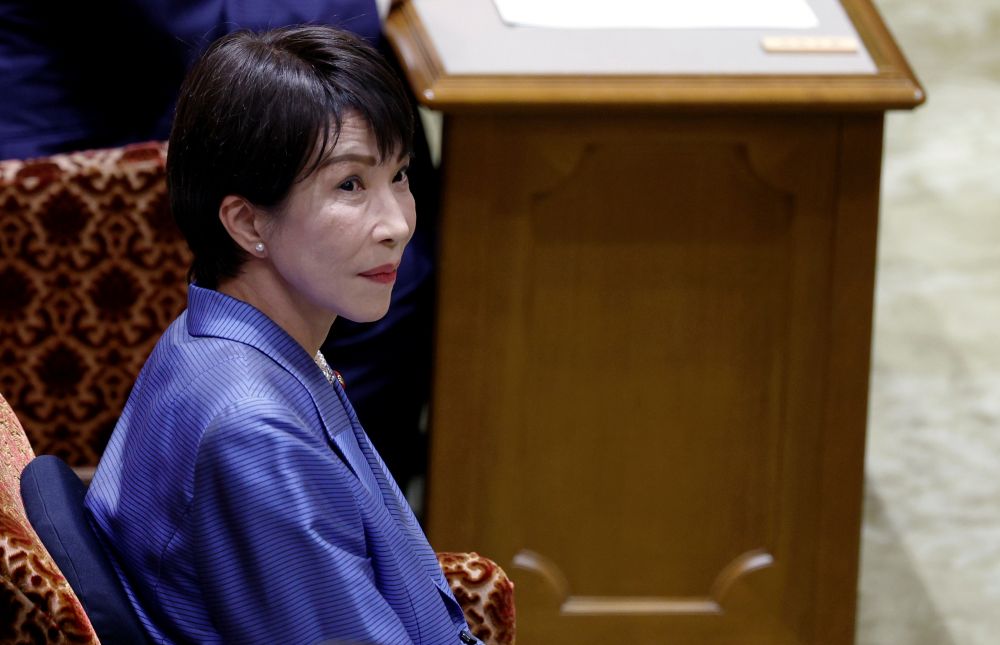
Prime Minister Takaichi achieved an
80% approval rating and got off to a flying start
After Sanae Takaichi assumed the position of Liberal
Democratic Party (LDP) President on October 4, she secured a majority in the
parliamentary vote for Prime Minister through a coalition with the Japan
Innovation Party (Ishin) and was appointed the 104th Prime Minister of Japan on
October 21. Although many initially predicted that her cabinet would be
short-lived, once the administration began operating in earnest, she achieved
the third-highest approval rating among newly appointed Prime Ministers since
2001. A detailed breakdown of this approval reveals that it is notably higher
among women than men, particularly among young women. Considering that the LDP’s
overall approval rating rose only slightly to 30%, support appears to be
emerging specifically for Prime Minister Takaichi as an individual.
The background to these high approval ratings lies not
only in Prime Minister Takaichi’s own personality winning public favor but also
in her successful execution of bilateral summit meetings, such as the Japan–Association
of Southeast Asian Nations (ASEAN) Summit she attended shortly after taking
office, the Japan–U.S. summit meeting with President Trump in Tokyo, and the
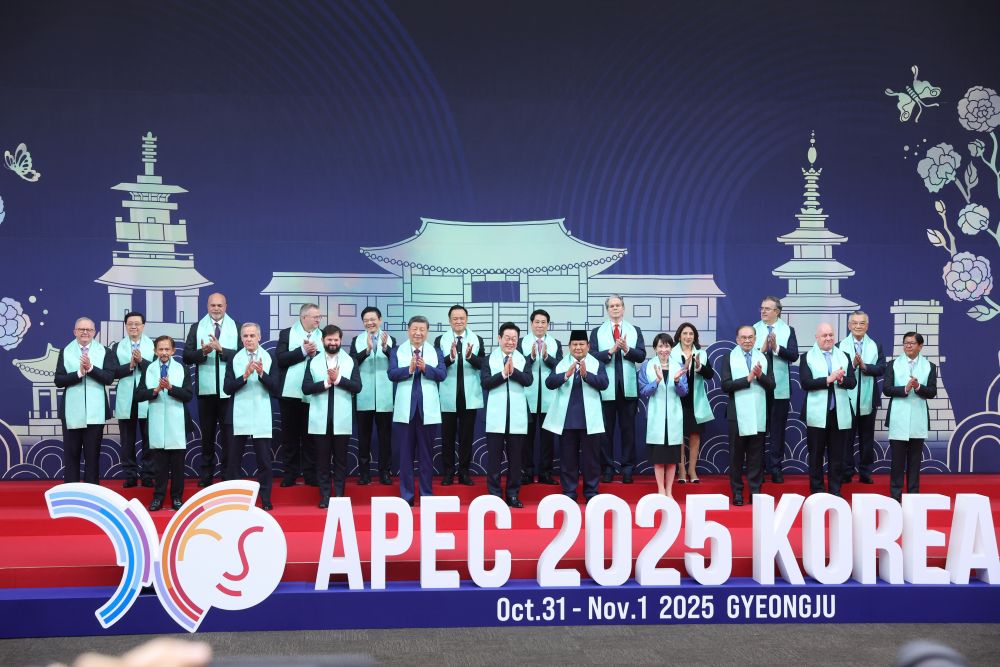
Japan–South Korea and Japan–China summits at the Asia-Pacific Economic Cooperation
meeting in Gyeongju, South Korea. Her diplomatic approach, particularly at the
Japan–ASEAN meeting, focused heavily on the Free and Open Indo-Pacific Strategy,
or FOIP, proposed by Prime Minister Abe in August 2016.
She has made some telling statements at her various
appearances without explicitly naming China. 1) In the East China Sea, activities
infringing upon Japan's sovereignty and provocative military activities
continue and are intensifying. In the South China Sea as well, militarization
and intimidating activities continue and are intensifying, causing serious
concern. 2) Unjust maritime claims and activities not based on the UN
Convention on the Law of the Sea cannot be accepted. Japan consistently supports
the rule of law at sea and reaffirms the importance of peaceful dispute
resolution based on international law. 3) Peace and stability in the Taiwan
Strait are also critical issues directly linked to regional security[1].
Reappearance of key players who supported the Abe
administration
The Takaichi administration saw personnel appointments
made largely as rewards for service, centered around the Aso faction led by
former Prime Minister Taro Aso, who played a crucial role in the LDP leadership
election. Notably, key positions within the Prime Minister’s Office from his
own inner circle included Naoya Imai, formerly of the Ministry of Economy,
Trade and Industry, who served as Secretary and Advisor for former Prime
Minister Shinzo Abe, appointed Special Advisor to the Cabinet; Takeo Akiba, who
also served in the Abe administration as Vice-Minister for Foreign Affairs,
appointed Special Advisor to the Cabinet; and Kazuo Masuda, who retired as Vice-
Minister of Defense in August this year, appointed Deputy Chief Cabinet
Secretary for Crisis Management, a role traditionally held by officials only from
the National Police Agency.
Moreover, the government explicitly stated its intention
to establish an intelligence agency, a concept that had previously surfaced and
faded repeatedly, and has begun moving toward creating a National Intelligence
Agency by July 2026. The National Security Bureau, expected to be headed by a
former National Police Agency official and that will be on equal footing with
the National Security Secretariat (NSS), has already appointed Keiichi
Ichikawa, a former Foreign Ministry official, Secretary-General of the NSS.
This effectively divides the three key posts involved in Japan’s foreign and
security policy—Foreign Affairs, Defense, and Police—in a balanced manner.
Backed by Prime Minister Takaichi’s high approval
ratings, both politicians and bureaucrats have regained their energy, and
institutional reforms such as defense equipment transfers and defense industry
development are being pushed forward at a rapid pace because of the
deteriorating security environment around Japan; the withdrawal of the New
Komeito from the coalition has removed the obstacles hindering institutional
reform.
Public perception of threats amid deteriorating security environment
surrounding Japan
In the House of Councilors (Sangiin: the Upper House)
election held this July, centrist-conservative parties such as the Democratic
Party for the People and hardline conservative parties such as Sanseito made
significant gains, leading to the LDP’s defeat as it failed to secure an
absolute majority. The Constitutional Democratic Party of Japan (CDP), the
largest opposition party that should have become the receptacle for public
support in place of the defeated LDP, also lost seats, resulting in a de facto
defeat.
While many voters expressed distrust in the LDP, the
deteriorating security environment surrounding Japan appears to have shifted
public perceptions of security. This has sharpened the view that the
left-leaning CDP cannot be entrusted with governance. In this context, changes
are emerging within the CDP itself. Former Chief Cabinet Secretary Yukio Edano,
who had led the charge in declaring the “Peace and Security Legislation”
enacted by the second Abe administration—which partially permits the exercise
of collective defense—unconstitutional, now argues it is constitutional. This
has started to polarize opinion within the party. For the CDP, aiming for a
change in government, the leadership is signaling a more conservative stance to
demonstrate its ability to formulate and execute realistic national security
policies. However, this has begun to create significant internal divisions
within the party.
Meanwhile, Prime Minister Takaichi drew China’s ire by
posting photos on social media showing her posing for a commemorative photo
with Taiwan’s representative at the Asia-Pacific Economic Cooperation.
Furthermore, the Chinese government reacted fiercely to Prime Minister Takaichi’s
remarks during a Diet session regarding a potential Taiwan contingency, swiftly
imposing a ban on imports of Japanese seafood products and urging its citizens
to refrain from traveling to Japan.
Militarily, the escalation ladder has been creeping
upward. Over a hundred Chinese naval and coast guard vessels have been deployed
in waters stretching from the southern Yellow Sea to the East China Sea, South
China Sea, and Pacific Ocean, primarily around the First Island Chain.
Additionally, Chinese Air Force fighter jets have locked their radars onto
Japanese Air Self-Defense Force fighters. However, the more forcefully China
responds toward Japan, the more it continues to provide a tailwind for Prime Minister
Takaichi if economic activities between Japan and China are no longer hindered
and are nearly back to normal.
The longer the standoff between Japan and China persists,
the more stable the Takaichi administration’s approval ratings become. If Japan
refuses to compromise at all and China ultimately backs down, a long-term
administration may well be within sight.
[1] “The 28th ASEAN Japan
Summit,” Ministry of Foreign Affairs, Japan, October 26, 2025 https://www.mofa.go.jp/a_o/rp/pageite_000001_00004.html (Accessed on December
6, 2025).
In 2004 he started working at the office of Member of the House of Representatives. In 2006 he took a position at the Japan Center for International Exchange (JCIE) as an Assistant Program Officer. Afterward, he was a Junior Research Fellow at Ilmin International Research Institute of Korea University. After coming back to Tokyo, he got a position at the Canon Institute for Global Studies (CIGS) and contributed to research and analytical activities of the team on Korean issues. From 2015 to 2017, he served as a Deputy Counsellor at National Security Secretariat (NSS), Cabinet Secretariat to deal with Northeast Asian diplomatic and security issues, especially Korean affairs. Rejoined CIGS in July 2017. He is also a Specially Appointed Associate Professor at Hosei University and Visiting Associate Professor at Ritsumeikan University. He received his Bachelor and Master degree of Policy Studies and Doctor of Political Science from Chuo University in 2001, 2004 and 2022. He was an exchange student at Korea University during graduate school.