Key Takeaways:
- South Korea emerged from the APEC summit with comparatively favorable trade and security agreements, including tariff relief and long-sought U.S. assent on nuclear-powered submarines and fuel-cycle capabilities.
- Yet these gains rest on fragile foundations, as implementation remains legally, politically, and strategically uncertain—and heavily dependent on continued U.S. approval.
- With the 2025 U.S. National Security Strategy revealing deep incoherence and transactional instincts toward allies, Seoul should treat post-APEC stability as provisional and plan accordingly.
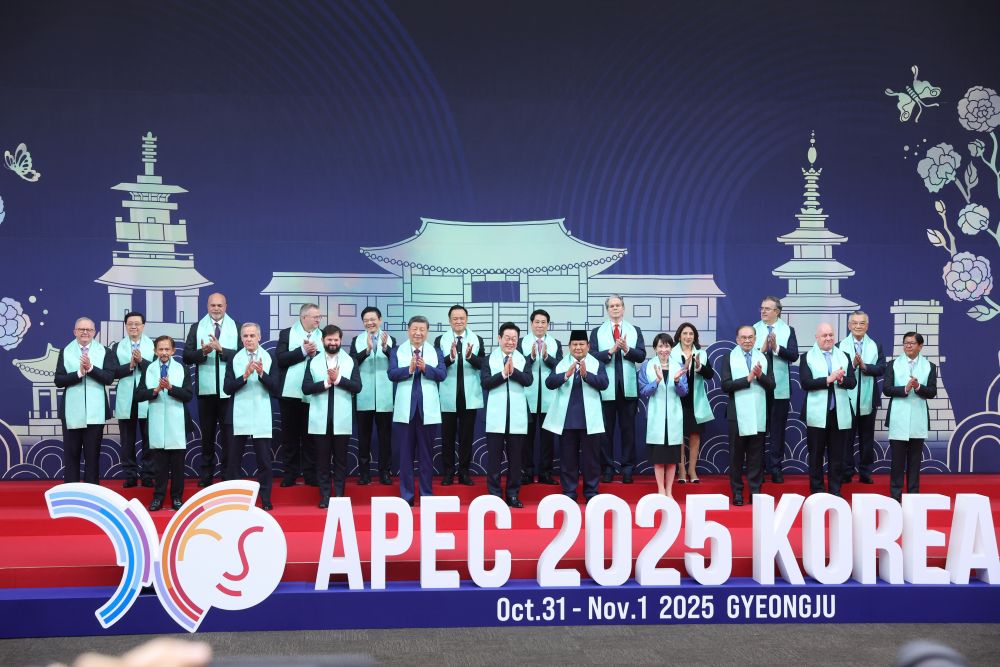
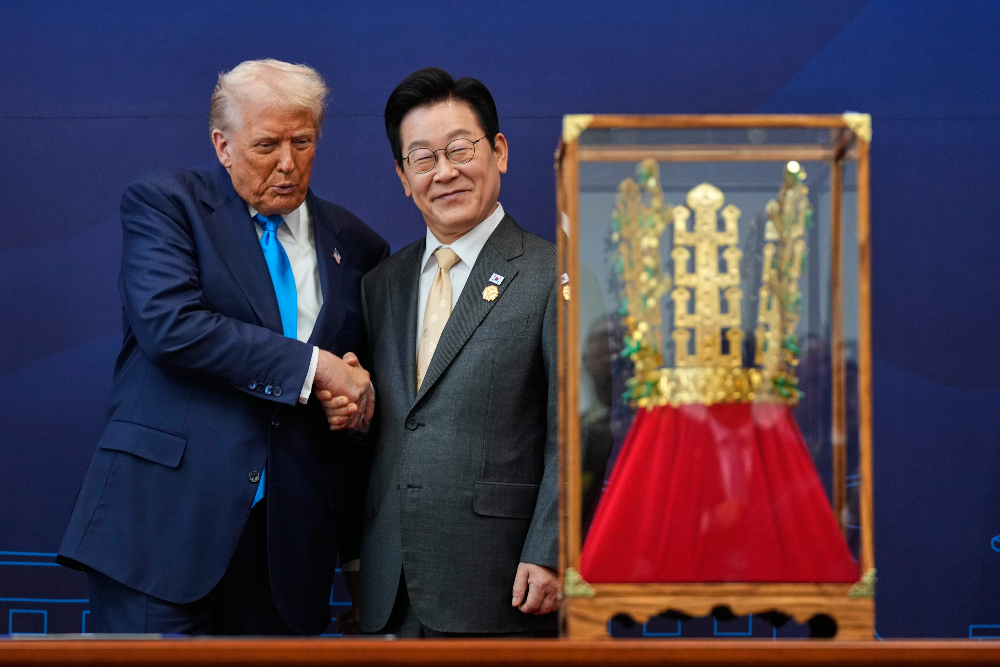
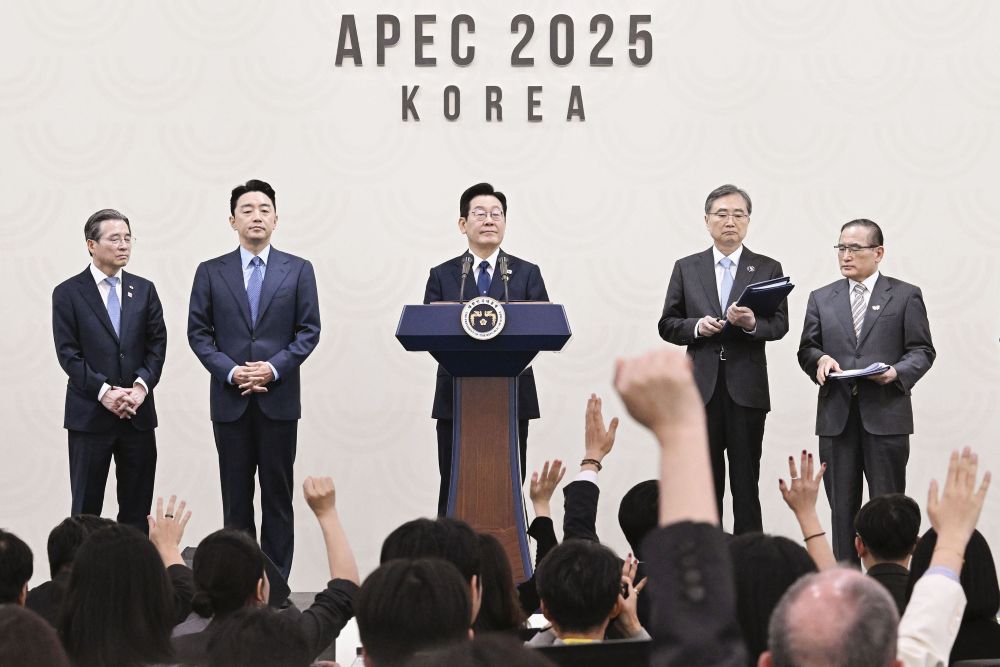
Given the circumstances, and relative to other US allies and strategic partners, South Korea can be moderately content with the current Washington-Seoul relationship. Despite a challenging timeline and demanding interlocutor, the Lee Jae-myung administration succeeded in negotiating a number of comparatively favorable economic and security/defense agreements with the Trump White House before and during the bilateral summit headlining the APEC extravaganza six weeks ago. For Trumpworld, however, six weeks is an eternity, and circumspection by South Korea is warranted. Indeed, since APEC a number of developments—especially the release of the 2025 US National Security Strategy—provide additional context by which one should evaluate the future of the new bilateral agreements intended to provide a forward-oriented foundation for US-South Korea relations. This Korea on Point contribution aims at this evaluation and concludes that Seoul should be cautious about assuming that recent outcomes will accomplish stated objectives.
Let’s Make a Deal
On the trade and commerce side of the ledger, over the
summer and early fall Washington and Seoul negotiated
a 15% basic tariff rate on US imports of South Korean goods (the same as Japan
and the European Union). This was conditioned on a contentious investment
component of the deal, in which South Korea managed to secure substantial
changes to initially infeasible US demands. Namely, instead of $350+bn of
investment by 2028 (with the US taking wildly disproportional profits and
influence over investment targets), South Korea is committed to invest $150bn
in shipbuilding over an uncertain timeline and $200bn over the coming decade or
more on other strategic industrial opportunities. This is not a huge amount
more investment than South Korean firms likely intended anyway as a part of
increased focus on the US market and de-risking from China. Moreover, South
Korea is not obligated to exceed $20bn in annual US-bound investment, thus
reducing the risk of foreign exchange volatility. Seoul also agreed to other
minor concessions, such as importing additional US-manufactured vehicles and
commercial airliners, streamlining phytosanitary import regulations,
cooperating on intellectual property rights, reducing digital services
discrimination, etc. On the whole, the Strategic Trade and Investment Deal is
not as sound as the previous KORUS FTA, but it is better
than new US arrangements with Japan or the EU.
In security and defense, Washington-Seoul discussions over
the last year have circled around the notions of alliance “strategic
flexibility” and “modernization,” which point toward greater responsibility
by South Korea for both conventional warfighting and integrated deterrence on and
around the Korean Peninsula. This complex of issues cast a shadow over the
security and defense part of the October 29 Trump-Lee meeting, with the big
news being US willingness to allow South Korea to build nuclear-powered attack submarines,
and to achieve civil reactor uranium enrichment and spent nuclear fuel
reprocessing for peaceful purposes. Both of these are long-held South Korean
goals, and getting US assent was a genuine accomplishment by the Lee
administration, although the paths toward completion of these capabilities are
long, uncertain, logistically
unclear, legally complicated, financially
and politically
fraught, and strategically
risky. There was also a diplomatic price, as Lee’s statement
announcing the submarine agreement put him on the record that South Korea acknowledges
the US expectation that they may be used to counter China—a statement likely
necessary to get Trump’s approval, but also one likely to irritate
China.
The security and defense portion of the US-South Korea
summit factsheet
also contains Seoul’s pledges to increase defense spending to 3.5% of GDP,
purchase $25bn in US defense equipment by 2030, and support US Forces Korea
with $33bn in comprehensive payments (orders of magnitude bigger than
agreed-upon amounts under the Special Measures Agreement), in addition to
numerous advancements on extended nuclear deterrence, US transfer of wartime
operational control to South Korea, North Korea policy, and other areas covered
in more detail by the annual US-South Korea Security Consultative Meeting and
Military Committee Meeting.
Well Begun Is (Still
Only) Half Done
It is tempting to look at the resolution of recent US-South
Korea negotiations and believe the Washington-Seoul relationship on solid
ground. But closer examination of US discourse since APEC shows deep currents
of complications, uncertainties, incoherence, and differing interests that
represent risks to the hard-fought stability that South Korea perceives in its
relations with the US post-APEC.
To begin with the nuclear-powered submarines, initial
Washington-Seoul misalignment
(misunderstanding? miscommunication?) on construction location, reactor
design, fuel sourcing, and other technical issues has subsided in favor of South
Korea building the boats in South Korea using an indigenous reactor design and
fuel. Yet huge complications and uncertainties remain for both Washington and Seoul.
As the timeline will consequently be long, this means that Seoul’s
nuclear-powered submarine acquisition will depend on continued US approval for
the foreseeable future. Heightening that risk is a connected issue, namely that
the Lee administration has tried to downplay
(even walk back) Lee’s affirmation that South Korean nuclear-powered attack
submarines could be deployed to counter China, a retraction that Washington has
admonished.
The path
to acquiring capabilities for uranium enrichment and spent nuclear fuel reprocessing
is even more fraught, requiring
numerous legal/regulatory changes beyond revision of or addenda to the US-South
Korea Agreement for Peaceful Nuclear Cooperation (the “123 Agreement”). There
are many non-proliferation obstacles that could be leveraged by US
congressional and bureaucratic opponents of South Korea enriching uranium and closing
the nuclear fuel cycle. President Trump and his senior officials have given
their approval, but if they become disengaged (or lose office) in providing
support to the initiative, Seoul’s efforts could stall.
Beyond these headline items, the post-APEC period has already
seen Washington-Seoul differences on the approach to Pyongyang (including a Lee
administration terminology
shift softening language on North Korean denuclearization, unappreciated
by Washington), the prospect
of temporarily reducing US-South Korea combined military exercises (which some
Lee administration officials advocate, occasioning US pushback),
the procedure
for reversion of wartime operational control of the South Korean military
under the Combined Forces Command (which the Lee administration wants on a
timeline, while the US insists on a conditions-based process), and the desirability
of proposed
projects for South Korean investment into US energy infrastructure (an
ostensible part of South Korea’s possible investment commitments).
The biggest question mark for the US-South Korea alliance
post-APEC is the same one facing all of Washington’s allies: what is the
meaning of the new US National Security Strategy (NSS)?
It is difficult to assess the post-APEC US-South Korea alliance in light of the
NSS because the document is utterly
inconsistent, arguing for and against: US primacy, great power competition,
Asia versus the western hemisphere as the focus of US power, and respect for US
allies, inter alia. The NSS is
somehow both transactional and deeply ideological, imperialist and
isolationist. The only constant is disdain for multilateralism and the
international rules-based order (an external reflection of the US’s domestic
drift to authoritarianism), underpinned by a MAGA ethos ultimately viewing
allies as instruments of US power.
Both the inconsistencies and constants of the NSS should worry South Korea. North
Korea does not merit a single mention in the NSS, despite the North Korean threat to the US, South Korea, and
Japan, as well as the document’s plain assertion of US interest in countering
any country representing a risk inside the first island chain. China is treated
primarily as an economic problem rather than a security concern, despite the NSS arguing for preventing the emergence
of a rival to US hegemony in any region, including Asia. The NSS toggles back and forth between Asia
and the western hemisphere as the key region requiring Washington’s attention
and resources. Allies are instructed to be more capable of and responsible for
their own security, yet are unsupported with respect to becoming more
autonomous. Moreover, they are simultaneously beggared by US trade policy.
More worrisome still is the NSS’s description of and prescription for Europe. The document’s open
call for US-backed subversion of Europe’s centrist-led democracies (in favor of
far-right ethno-nationalist parties), as well as of the European Union as an
entity, demonstrates clear metastasis of US domestic authoritarianism and
Christian nationalism into the undermining of both the international rule-based
order and sovereign liberal democratic political choices of other states. This
type of behavior by a powerful ally should be profoundly unsettling to Seoul,
both because it destroys multilateralism and the international rules-based
order in which middle powers thrive, and because it indicates that the US is
willing to act neo-imperialistically. South Korea already has revisionist
neo-imperial China in its neighborhood; it does not need a revisionist
neo-imperial US ally in addition.
Past Performance Is
No Guarantee of Future Results
The NSS is unsuited
as a tool for divining specific future US policy, but it is very helpful in
revealing general US unreliability. The NSS
is a psychopathological profile of Trump administration schizophrenia—a
competing mash-up of primacists, prioritizers, restrainers, neo-isolationists,
neo-imperialists, MAGA populists, Christian nationalists, and various flavors
of crackpot overseen by a mercurial, corrupt, venal executive. There is no consistent
strategic core, and thus no coherence. Therefore also no reliability.
To wit, after months of export controls on NVIDIA H200 GPU
sales to China (ostensibly the US’s only near-peer rival), on December 8 the US
Justice Department indicted
numerous suspects on violating the ban. The following day, Trump announced
through social media that NVIDIA would
be allowed to sell China the H200
chips, which are critical for advanced artificial intelligence training that
the US government claims should be restricted for national security reasons. It
is nearly impossible to understand the strategic logic of these developments.
If you are a country—such as South Korea—that faces US-imposed foreign-direct
product rule restrictions on semiconductor and semiconductor equipment exports
to China, how do you understand this US reversal? Simply put, US policy can
change at a whim.
Likewise, even as the US—e.g., in the NSS—claims that allies should increase their own contribution to
deterrence, including pushing back against China, the Trump administration has barely
supported Japan after new prime minister Sanae Takaichi stated the obvious
fact that a Taiwan Strait crisis would represent a potentially existential risk
for Japan, to which China responded with
rhetorical abuse and military escalation. How ought Japan and—mutatis
mutandis—South Korea understand this US reversal? Again, US policy can change
at a whim.
For South Korea, there is seemingly stability in the Washington-Seoul relationship: difficult agreements are now signed, the upcoming 2025 US National Defense Strategy supposedly refers to South Korea as a model ally, etc. But with all things Trump, one’s place in the sun today does not imply favor tomorrow. The question is, what should South Korea do about it?
Mason Richey is professor of international politics at Hankuk University of Foreign Studies (Seoul, South Korea), president of the Korea International Studies Association (KISA), and Editor-In-Chief of the Journal of East Asian Affairs. Dr. Richey has also held positions as a POSCO Visiting Research Fellow at the East-West Center (Honolulu, HI), DAAD Scholar at the University of Potsdam (Germany), and Senior Contributor at the Asia Society (Korea branch). His research focuses on European foreign and security policy, US foreign policy in the Indo-Asia-Pacific, and cybersecurity. Recent scholarly articles have appeared (inter alia) in Australian Journal of International Affairs, Asian Survey, Political Science, Journal of International Peacekeeping, Pacific Review, Asian Security, Global Governance, and Foreign Policy Analysis. Shorter analyses and opinion pieces have been published in War on the Rocks, Le Monde, the Sueddeutsche Zeitung, and Forbes, among other venues. Dr. Richey is also co-editor of the volume The Future of the Korean Peninsula: 2032 and Beyond (Routledge, 2021), and co-author of the US-Korea chapter for the tri-annual journal Comparative Connections (published by Pacific Forum). He is also a frequent participant in a variety of Track 1.5 meetings on Indo-Asia-Pacific security and foreign policy issues.