- #China
- #South Korea
Key Takeaways:
- The installation of the structures itself is difficult to view as a violation of the South Korea–China Fisheries Agreement
- If the installation of structures is carried out continuously, repeatedly, and cumulatively, and if it leads to the infringement of our sovereign rights, such as interfering with the fishing activities of our fishing vessels, destruction of the marine environment, or a decrease in marine biological resources, it can be viewed as a violation of the obligation of restraint.
China’s refusal to allow inspections suggests a failure to meet transparency and Environmental Impact Assessment obligations.
Currently, there are three Chinese offshore steel structures in the West Sea (Yellow Sea), named "Shenlan No. 1," "Shenlan No. 2," and “Atlantic Amsterdam.” "Shenlan No. 1" (diameter 60m) was installed on July 2, 2018, and the larger "Shenlan No. 2" (diameter 70m) is estimated to have been installed in May 2024. “Atlantic Amsterdam” is a retired oil rig that has been retrofitted to a floatel for the Chinese workers in “Shenlan No. 1” and “Shenlan No. 2,” which has reportedly been in the West Sea since 2022.
These structures are located within the Provisional Measures Zone under the South Korea-China Fisheries Agreement, specifically in waters closer to the Chinese side of the imaginary median line that could serve as the EEZ delimitation line. While China claims these are deep-sea aquaculture facilities, there is suspicion in South Korea that they represent a strategic move to attempt effective control over the West Sea.
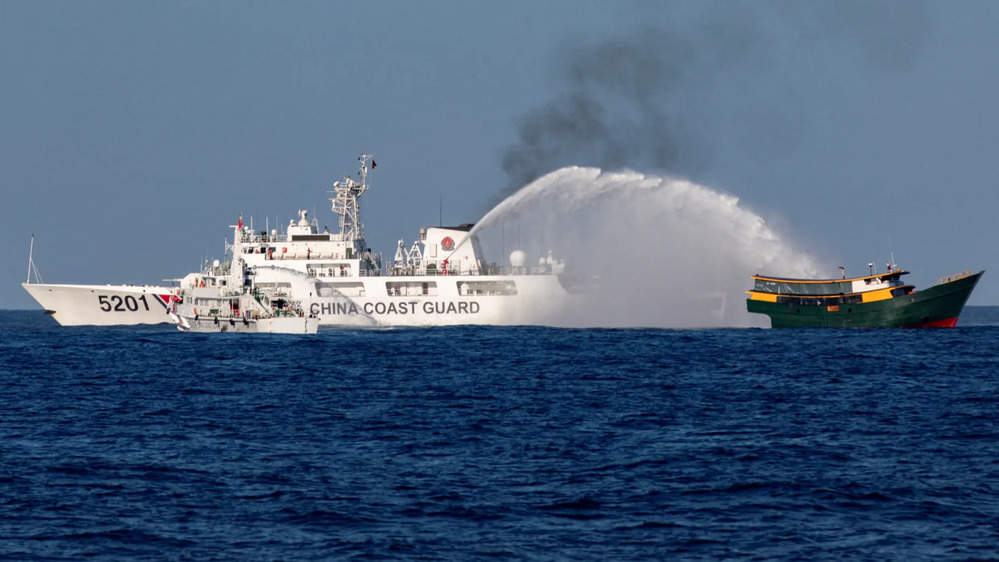
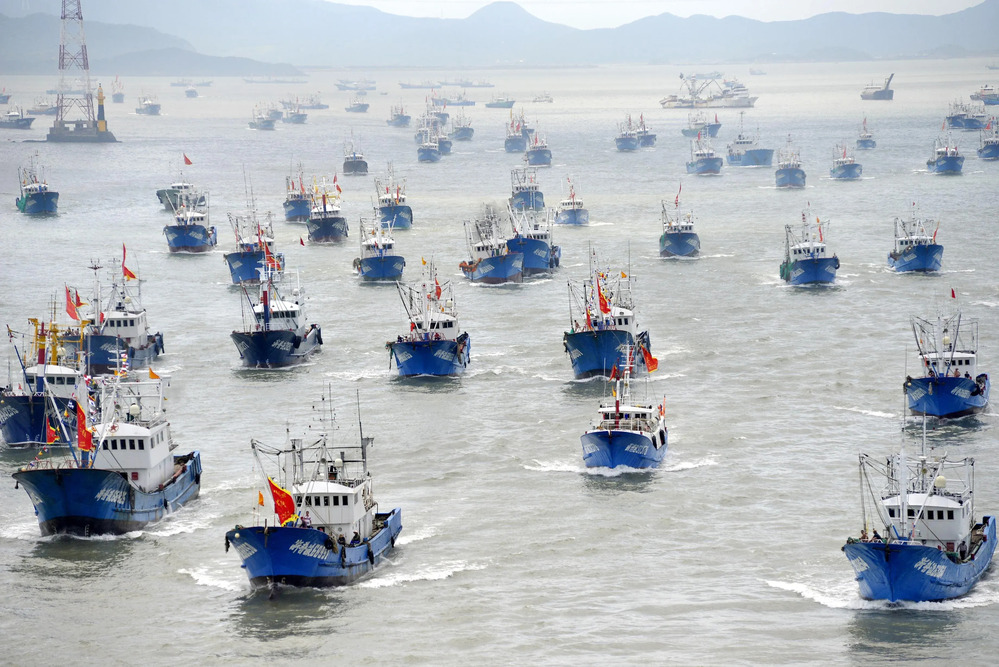
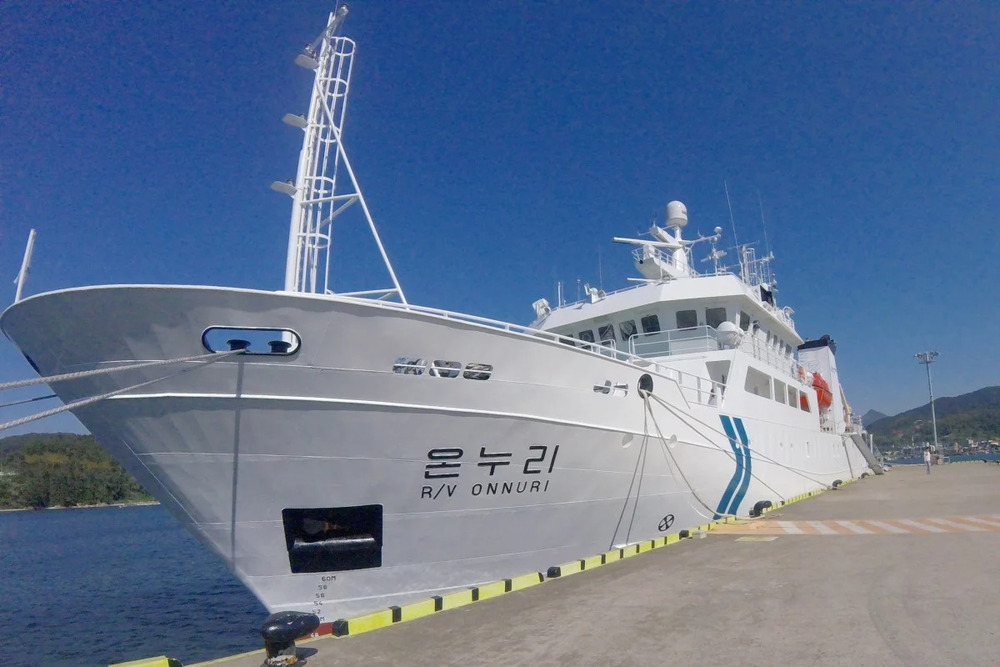
Tensions escalated on February 26, 2025, when the South Korean marine research vessel 'Onnuriho' approached within 1km to inspect the structures but was blocked by Chinese Coast Guard and civilian vessels, preventing the deployment of research equipment.
China's installation of steel structures in the West Sea raises questions about its compatibility with international law governing fisheries and other issues between China and South Korea. This piece will examine the facts related to the steel structures from an international legal perspective, which will lead to the determination of legality/illegality of the relevant Chinese activities.
Are the Installation of the Structures in Violation of International Law?
To determine whether China's installation of structures in the West Sea (Yellow Sea) violates international law, we will examine the South Korea-China Fisheries Agreement and the United Nations Convention on the Law of the Sea (UNCLOS).
1) Violation of the South Korea-China Fisheries Agreement: Not Likely
The installation of the structures itself is difficult to view as a violation of the South Korea-China Fisheries Agreement. The South Korea-China Fisheries Agreement only regulates fishing activities in the West Sea (Yellow Sea) and does not explicitly prohibit the installation of structures. However, if the installation of structures harms the safety of navigation and fishing operations or adversely affects marine biological resources, a violation of the agreement may arise. In this case, the issue can be raised through the South Korea-China Joint Fisheries Committee, and China's measures can be urged.
2) Violation of the United Nations Convention on the Law of the Sea: Likely
UNCLOS stipulates regulations on EEZs, but since the EEZ delimitation between South Korea and China has not been established, the regulations cannot be applied as they are in the waters where the EEZ claims of both countries overlap. However, UNCLOS stipulates that artificial islands, facilities, and structures do not have the status of islands and do not affect the delimitation of territorial waters, EEZs, or continental shelves. Therefore, China cannot declare an EEZ based on these structures.
The important question is whether China's act of installing structures in the West Sea (Yellow Sea) violates the "obligation of restraint" under UNCLOS, which means the obligation “not to jeopardize or hamper the reaching of the final agreement.” (UNCLOS Article 74(3)) Since 'Shenlan' Nos. 1 and 2 are installed on the west side of the median line that can be the baseline for the EEZ delimitation between the two countries, the fact that this area may belong to China's EEZ after delimitation makes it difficult to judge whether the obligation of restraint has been violated. If the installation of structures is carried out continuously, repeatedly, and cumulatively, and if it leads to the infringement of our sovereign rights, such as interfering with the fishing activities of our fishing vessels, destruction of the marine environment, or a decrease in marine biological resources, it can be viewed as a violation of the obligation of restraint.
In addition, UNCLOS stipulates the obligation to protect the marine environment and the obligation to conduct environmental impact assessments. It is unknown what impact China's installation of structures in the West Sea (Yellow Sea) has on the surrounding marine environment. It is necessary to confirm whether an environmental impact assessment has been conducted regarding the possibility that aquaculture farming may cause substantial pollution or harmful changes to the marine environment and fish resources. If the environmental impact assessment has not been conducted, the South Korean government can claim that China has violated UNCLOS regulations.
Furthermore, UNCLOS recognizes the right to conduct marine scientific research to all member states. On February 26, the Onnuri-ho research vessel attempted to measure the potential environmental impact of Chinese structures in the West Sea (Yellow Sea), but it was unable to conduct the planned survey due to Chinese interference. This is an infringement of South Korea's right to conduct marine scientific research.
Assessment of Effectiveness: Constraining Creeping Jurisdiction
Addressing the question of how effectively the Bilateral Fisheries Agreement and UNCLOS principles can constrain China’s creeping jurisdictional assertions through this ostensibly civilian infrastructure, the analysis suggests a mixed landscape of efficacy:
- Ineffectiveness of the Fisheries Agreement: The bilateral agreement offers low leverage against "creeping jurisdiction" regarding infrastructure. Because the agreement focuses on regulating fishing activities rather than construction, it does not provide a direct legal mechanism to stop the installation of "Shenlan" structures unless collateral damage (to navigation or resources) is proven.
- Legal vs. Physical Constraints (UNCLOS): UNCLOS is effective in a legal sense by explicitly denying these structures the ability to generate new maritime zones or territorial status. However, it lacks physical effectiveness in preventing their construction in undelimited waters, particularly west of the median line where the "obligation of restraint" is harder to invoke.
- The "Environmental" Constraint: The most effective tool for constraining China’s actions lies in the functional obligations of UNCLOS rather than the jurisdictional ones. China's refusal to allow inspections suggests a failure to meet transparency and Environmental Impact Assessment obligations. By framing the issue around the "duty to prevent harm" and environmental protection, South Korea can challenge the legitimacy of the "civilian" infrastructure more effectively than through sovereignty claims alone.
South Korea's Response
China's act of installing structures in the West Sea (Yellow Sea) does not in itself constitute a violation of the South Korea-China Fisheries Agreement or UNCLOS regulations. Therefore, excessive responses should be refrained from. However, if the installation of structures has a negative impact on maintaining fishing order or preserving marine biological resources, it violates the purpose and spirit of the South Korea-China Fisheries Agreement and may violate the principle of the duty to prevent harm, which is considered a general principle of international law. Also, if the installation of structures is carried out continuously, cumulatively, and repeatedly, it may violate the obligation of restraint under UNCLOS.
Therefore, South Korea must continuously promote the following responses:
- Raise and protest through diplomatic channels the possibility that China's actions infringe on our legitimate maritime rights and UNCLOS rights.
- Discuss the impact of the structures on maintaining fishing order in the Provisional Measures Zone and the state of marine biological resources through the South Korea-China Joint Fisheries Committee and seek solutions.
- Demand that the Chinese government conduct an environmental impact assessment and disclose the report.
- If China continues to act irresponsibly, seriously consider filing a lawsuit with the International Tribunal for the Law of the Sea. In this case, a litigation strategy must be established to avoid China's declaration of exclusion of compulsory jurisdiction.
- Urge China to respond sincerely at the EEZ delimitation talks with China.
- Seriously consider entrusting the EEZ delimitation issue to an authoritative international judicial body, such as the International Tribunal for the Law of the Sea or the International Court of Justice, based on an agreement between the two countries. It may be appropriate to file an EEZ delimitation case with the International Court of Justice through the conclusion of a special agreement under Article 36(1) of the Statute of the International Court of Justice.