- #North Korea
- #Sanctions & Human Rights
Key takeaways:
- As an impartial body, the Panel conducted investigations into cases regardless of their geographic location or scale. Responding to inquiries from the Panel can be justified as cooperation with a neutral international body and as part of the implementation of Security Council resolutions.
- In October 2024, 11 like-minded states (Australia, Canada, France, Germany Italy, Japan, Netherlands, New Zealand, the Republic of Korea, United Kingdom, and United States) established the MSMT, approximately half a year after the Panel's termination.
- Freed from the formal constraints of Security Council resolutions, they are not limited to addressing only narrowly defined sanctions violations, but can also conduct deeper and broader scope of sanction evasion investigations, including human rights violations associated with North Korea’s sanctions violations.
It has now been more than a year and a half since the UN Panel of Experts (hereafter, the Panel) monitoring the implementation of the UN Security Council Resolutions against the Democratic People’s Republic of Korea(North Korea) concluded its mandate at the end of April 2024. The Committee still conducts its mandate, but it lacks the support of the Panel. Given the difficulty of the UN establishing an alternative internal mechanism, countries, NGOs, and research institutes have sought to contribute to mitigating the impact of the absence of the Panel.
This article revisits the role of the Panel and discusses the implications of the absence of the Panel and possible approaches to addressing it. In particular, it focuses on the Multilateral Sanctions Monitoring Team (MSMT), which currently comes closest to the role previously played by the Panel of Experts. It examines the limitations of the MSMT, and the challenges faced by countries and industries in implementing sanctions in the continued absence of the Panel. Building on this analysis, it offers recommendations aimed at addressing these challenges and, more importantly, enhancing effectiveness by leveraging advantages that differ from those of the Panel.
The Role of the Panel and the Impact of Its Absence
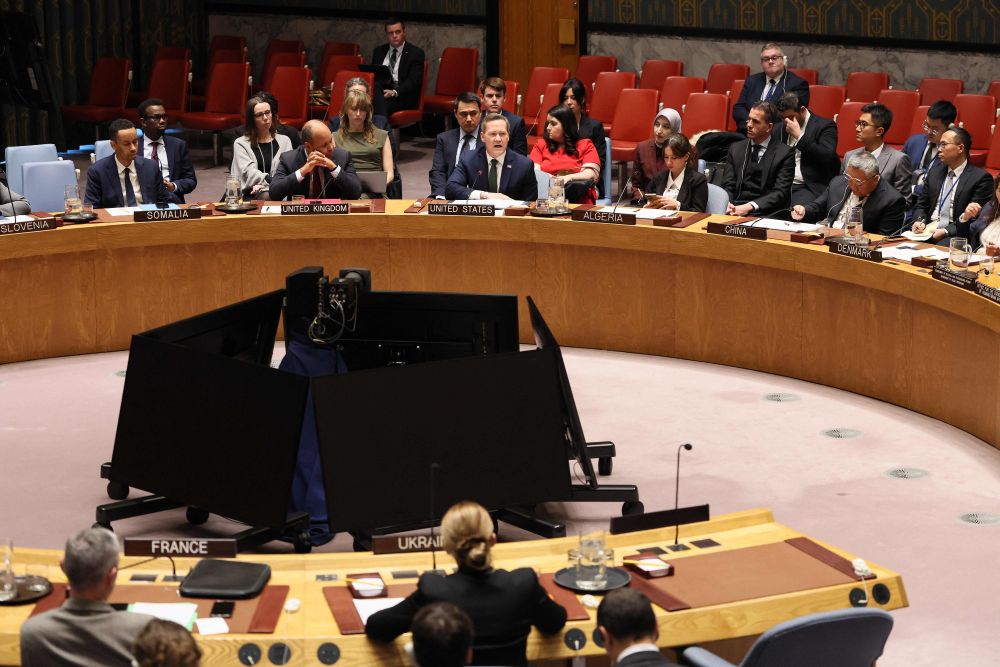
The panel was established under paragraph 25 of Security Council resolution 1874 (2009) to assist the Security Council Committee established pursuant to the Security Council resolution 1718 (2006) (1718 Committee), a UN Security Council subsidiary body to oversee the UN’s North Korean sanctions measures. The 1718 Committee consists of the fifteen UN Security Council Member State, while the Panel consisted of the eight members of independent experts from five Security Council Permanent Member States, Japan, Republic of Korea, and a country of the “global South.” Several functions proved particularly important and were carried out primarily by the Panel, rather than by the Committee’s member States. The most significant role of the Panel was the production of midterm and final reports presenting the findings of its investigations and corresponding recommendations. These reports were based on the Panel’s activities, including its investigations, analytical work, and exchange with the countries.
What makes the Panel fundamentally irreplaceable by other organizations was its strong mandate grounded in Security Council resolutions, which UN Member States are obliged to accept and implement. Under these resolutions, the Panel was granted a high degree of autonomy to investigate cases of non-compliance. The relevant Security Council resolutions further urge States and other interested parties to cooperate fully with the Panel of Experts, in particular, by providing information. The Panel gathered information by requesting information to the countries and relevant parties directly. It further analyzed the obtained information and published the results of the investigation and recommendations, including the individuals and entities to be designated, which were published online.
Through these activities, the Panel cooperated with the countries and assisted their implementation of the sanction measures. When invited by the host countries, the Panel also conducted on-site investigations and outreach activities. Such assistance to the countries is another important role of the Panel.
The Security Council resolutions and institutional legacy of the UN contribute significantly to garner cooperation of the countries. Issues related to the Security Council sanctions against specific country are inherently politically and diplomatically sensitive, and this is particularly true in the case of the North Korean sanctions. For that reason, it is not an easy decision for governments to provide information on sanctions-violation cases, especially for those that wish to avoid creating confrontational relationships with the countries concerned, or that maintain limited political interest or capacity in addressing such issues.
In this context, the existence of a UN mandate and the UN’s institutional legacy played a critical role. Furthermore, as an impartial body, the Panel conducted investigations into cases regardless of their geographic location or scale. Responding to inquiries from the Panel can be justified as cooperation with a neutral international body and as part of the implementation of Security Council resolutions. It created a degree of pressure on governments and relevant parties to cooperate with the Panel. Moreover, Panel reports issued as official UN documents recorded whether States and investigated parties responded to the Panel’s requests for information and whether they cooperated with the Panel. These aspects made cooperation easier to explain and defend, both externally in relations with North Korea or other concerned countries and also internally within government decision-making processes. This becomes even clearer when one considers the situation in reverse.
If a request for information on sanction violations were made by one country (or a group of countries) to another country, cooperation would require a diplomatic or political decision, or even a bilateral arrangement. There is no general obligation to respond, and doing so could risk damaging relations with the sanctioned State or with other related countries. Given that there is no legal obligation to respond, deciding to cooperate under such circumstances presents a high threshold. Furthermore, research reports published by like-minded countries or private entities tend to be thematic, reflecting specific interests or project budget constraints, which in turn makes it more difficult for governments, not to mention individuals, to cooperate in such investigations driven by the national interests of individual countries. This difference constitutes a crucial element distinguishing the Panel’s activities from those of any government or private body seeking to supplement its work.
However, the Panel is not free from constraints or its own structural limitations. As the Panel is composed of experts from specific countries with interests in this issue, political confrontations and differences of the diplomatic positions among States, especially among the permanent members of the Security Council, were often directly reflected in its investigations and reports. For these reasons, the Panel’s work had been occasionally impeded by certain members and has also been questioned by some countries for its impartiality.
Furthermore, the Panel’s recommendations, particularly those concerning the designation of individuals, entities, and vessels involved in sanction violations, have not effectively contributed to the work of the Committee. Despite repeated recommendations by the Panel, no new designations have been adopted since 2019. In this way, when the Panel’s investigative findings do not lead to new sanctions designations by the UN, and when the relevant governments do not undertake law enforcement actions under their domestic legal frameworks based on the Panel’s investigations, the Panel ultimately failed to produce tangible effects. This, in turn, undermined the value and authority of the Panel.
Who Stands Watch in the Panel’s Absence?
Since the termination of the Panel’s mandate, various actors, including countries, research institutes, and NGOs, have discussed alternatives to the Panel. Initial discussions explored a range of options, including proposals to establish a new mechanism under the UN General Assembly, to assign investigative tasks within a UN body, or to divide the Panel’s functions and assign multiple organizations to conduct parts of its work, rather than tasking its role with a single organization.
In October 2024, 11 like-minded states (Australia, Canada, France, Germany Italy, Japan, Netherlands, New Zealand, the Republic of Korea, United Kingdom, and United States) established the MSMT, approximately half a year after the Panel's termination. The MSMT is the organization that comes closest to serving as an alternative to the Panel: it investigates sanction non-compliance and publishes the result of the investigation. The MSMT also briefed the report to the UN Member States at the UN Headquarters in New York, transmitted the first report to the Security Council, and registered them as a UN document.
In addition, even before the termination of the Panel’s mandate, NGOs and research institutes conduct certain tasks similar to the Panel’s. Some publish thematic reports on the specific area of non-compliance, and others conduct capacity building training for government officials and industries.
Given the current dynamics within the Security Council, the likelihood of adopting a resolution to re-establish the Panel on North Korea is extremely low. Moreover, every recourse to the General Assembly presents significant limitations. General Assembly resolutions do not carry the same legal effect as Security Council resolutions, and it remains uncertain whether the required two-thirds majority for the adoption of an important question could be secured. In addition, there are concerns that such action by the General Assembly could be criticized as undermining the Security Council decision. As a result, it is unlikely to establish a body that meaningfully substitutes the Panel, while certain investigations can be tasked to UN organizations like the United Nations Institute for Disarmament Research (UNIDIR). Under these circumstances, the remaining alternatives are government-based mechanisms, including like-minded coalitions such as the MSMT and regional organizations, as well as non-governmental bodies, which may also work in cooperation with one another.
The MSMT: Contributions, Constraints, and Future Potential
Since its establishment, as of December 2025, the MSMT has issued two public reports, in late May 2025 and late October 2025. The first report focused on cooperation between North Korea and Russia in the context of the war in Ukraine, while the second report examined the activities of North Korean cyber actors. Compared with the relatively simple first report, the second report incorporates a significantly larger volume of primary-source material and provides more detailed descriptions of the modus operandi and information about the actors involved in sanction evasion and violations.
The level of detail of the information provided varies significantly depending on the contributing Member State. Certain counties’ sections lack the names or any details of the entities, which significantly affects the usefulness of the information. There are various reasons why governments may refrain from making information public, including domestic or external political considerations, or situations in which a case could not be brought or prosecuted. However, the absence of concrete information, such as specific names, significantly undermines the usefulness of such reports.
This is problematic because the effectiveness of sanctions implementation does not depend solely on governments, through the enactment of domestic legislation or law enforcement. In practice, the frontline actors responsible for implementing sanctions are financial institutions and private companies. What these private actors need is not only a general description of methods or typologies, but also concrete information, such as specific individuals, entities, or locations that require heightened attention. Furthermore, even among national governments, there are those that have limited interest in the North Korea issue or possess constrained intelligence and law enforcement capacities. North Korea has taken advantage of these structural limitations in national enforcement capabilities for its illicit activities. These countries also require detailed information for sanctions implementation.
Furthermore, there appears to have been limited visible reaction to these reports, compared to the UN Panel reports. A decline in international attention risks weakening broader engagement with North Korea sanctions. Moreover, their findings have not yet been translated into concrete actions.
To address the issues, the MSMT should further pursue measures to enhance the value of the report and gain attention to its reports. The options include to continue including first-hand, unpublished information; to encourage more countries to join this mechanism, and to jointly designate the individuals and entities based on the findings in the reports and recommend such designations to all the countries.
As discussed, alternative mechanisms exemplified by the MSMT may not fully substitute the Panel. However, precisely because they are not grounded in a Security Council mandate, they also possess distinct characteristics and potential advantages.
These like-minded countries possess intelligence capabilities and resources that the Panel did not have. Also, they can publish reports in a timely manner, without fixed timelines under the resolutions. Furthermore, the MSMT Member States share common values not only in the areas of sanctions implementation and human rights issues in North Korea. By leveraging this characteristic, they can add a different form of value that is distinct from that of the Panel.
North Korea’s nuclear and missile programs are not only international security concerns, but significant human rights concerns. Human rights abuses were reported in core parts of the sanctions evasions, including the forced labor in the concentration camps to produce export goods; the exploitation of overseas workers; nuclear contamination risks faced by nuclear technicians; environmental pollution around nuclear test sites; and the forced deployment of orphanage graduates to coal mines. Looking ahead, if an agreement were reached on nuclear and/or missile issues, would the countries actively promote economic cooperation overlooking the country’s internal conditions? Comprehensive investigations beyond the narrowly defined Panel’s scope of investigation would provide countries with information necessary to determine their national positions on this issue.
Impact of the Absence of the Panel: Legal Challenge
Against this background, it is necessary to consider the broader implications for States if the absence of the Panel were to persist. While, as discussed above, a wide range of challenges may arise in such circumstances, this section focuses on one particularly important legal challenge, an area in which the Panel had played a critical role and where individual States often face limitations.
For effective implementation, intelligence and enforcement are essential. However, there are significant capacity gaps among countries. To assist countries with limited resources for intelligence, comprehensive reports covering cases across regions in a timely manner, like the Panel’s biannual reports, as well as the consultation and assistance for compliance, like the Panel had offered, are vital.
Furthermore, sanction evasion cases often require international information sharing and judicial cooperation to gather sufficient evidence to proceed with prosecution and trial. This gives rise to two key challenges. First, establishing cases is extremely difficult without information or judicial cooperation from the country concerned, which is often hard to obtain. Second, without a formally established case, authorities are generally unable to disclose relevant information.
The Panel’s reports and investigations were not necessarily constrained by such limitations of official judicial proceedings. Instead, the Panel was able to publish cases together with the evidential material. While the Panel did not exercise national law enforcement authority, its publication deterred individuals and entities engaged in illicit activities. In this sense, the Panel’s direct communication with governments and the information made available through its reports helped overcome structural difficulties that countries face in addressing sanction violations.
Conclusion
At this stage, it is highly unlikely that the Panel is re-established within the UN. The multilateral sanctions monitoring teams (MSMT), or any possible non-UN alternatives, cannot fully replace the Panel. However, precisely because such mechanisms are not grounded in Security Council resolutions, they are able to operate with greater flexibility and to pursue deeper, more sustained investigations than would otherwise be possible under a strictly mandated UN framework. Also, the MSMT can issue reports in a timely manner, and the MSMT Members can further take immediate action to leverage the value of the report, such as joint designations. Additionally, the MSMT can expand its membership, thereby demonstrating solidarity in countering North Korea’s nuclear and missile development.
Moreover, freed from the formal constraints of Security Council resolutions, they are not limited to addressing only narrowly defined sanctions violations, but can also conduct deeper and broader scope of sanction evasion investigations, including human rights violations associated with North Korea’s sanctions violations.
Maiko Takeuchi served as a member of the United Nations Security Council 1874 (DPRK) Panel of Experts from 2016 to 2021. She is an attorney and the CEO of Compliance and Capacity Skills International APAC and advises governments and international organizations. She also lectures on international organization studies at the Graduate School of Takushoku University. She conducts research at leading Japanese institutions, including the Research Institute of Economy, Trade and Industry (RIETI) and the Japan Institute of International Affairs (JIIA), and is a regular media contributor, including NHK and Nikkei. Before joining the UN, she served as a civilian defense attaché at the Embassy of Japan in the Republic of Korea. She also held roles on nonproliferation and national security at the Japanese Cabinet Secretariat, the Ministry of Defense of Japan, and the Ministry of Economy, Trade and Industry. She holds an MA in Regional Studies-East Asia from Harvard University, an LLM from New York University School of Law, and an LLB from the University of Tokyo.