- #China
Key Takeaways:
- South Korea must view the Yellow Sea as part of the Indo-Pacific maritime domain and recognize that it is directly linked not only to South Korea’s own security, but also to the maritime security of democratic partners across the Indo-Pacific, including its ally the U.S., European partners, and the IP4 (Indo-Pacific Four) countries.
- Defining the Yellow Sea as part of the Indo-Pacific maritime domain is not a confrontational choice aimed directly at China, but rather a preventive and pragmatic strategic shift designed to block the erosion of a rules-based order
- South Korea reaches a position where it can make substantive contributions in maritime, space, and information capabilities
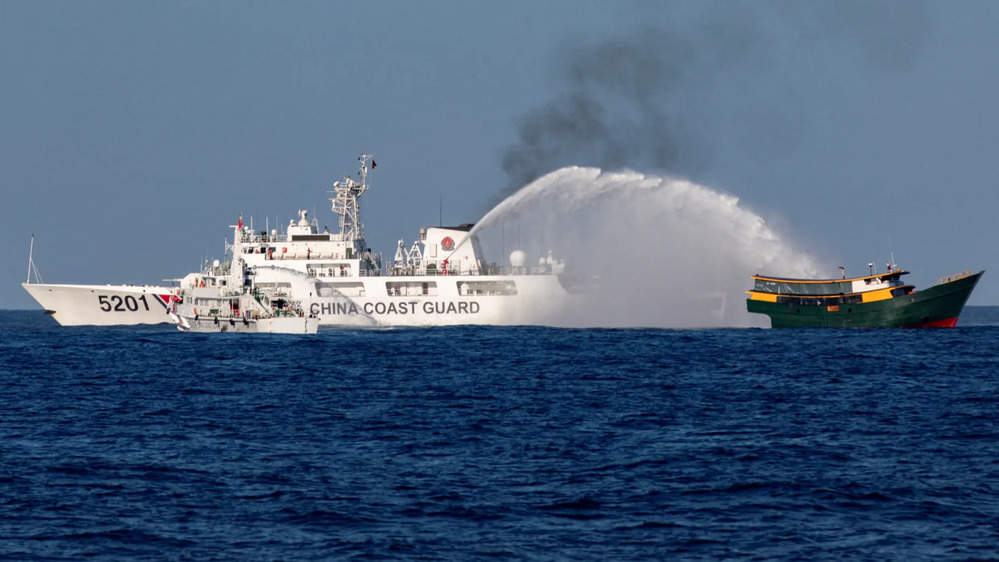
China’s artificial structures in the Yellow Sea—including the installation of aquaculture platforms and observation buoys within the Korea–China Provisional Measures Zone (PMZ)—are publicly justified on non-military grounds such as scientific research and support for fisheries; in practice, however, they function as gray-zone instruments designed to entrench China’s persistent presence in the Yellow Sea and to normalize its maritime jurisdictional claims through faits accomplis. Since the 2010s, China has increasingly come to view the Yellow Sea not merely as a maritime boundary adjacent to Korea, but as a strategic space in which U.S.–ROK military activities and access by U.S. strategic assets within the region should be constrained. In particular, following South Korea’s deployment of the THAAD system in 2017, China has accelerated the implementation of a gray-zone strategy in the Yellow Sea by expanding its influence without triggering armed conflict, through the routine operations of the China Coast Guard, the management of fisheries order, and the legally codified authorization of coercive force.
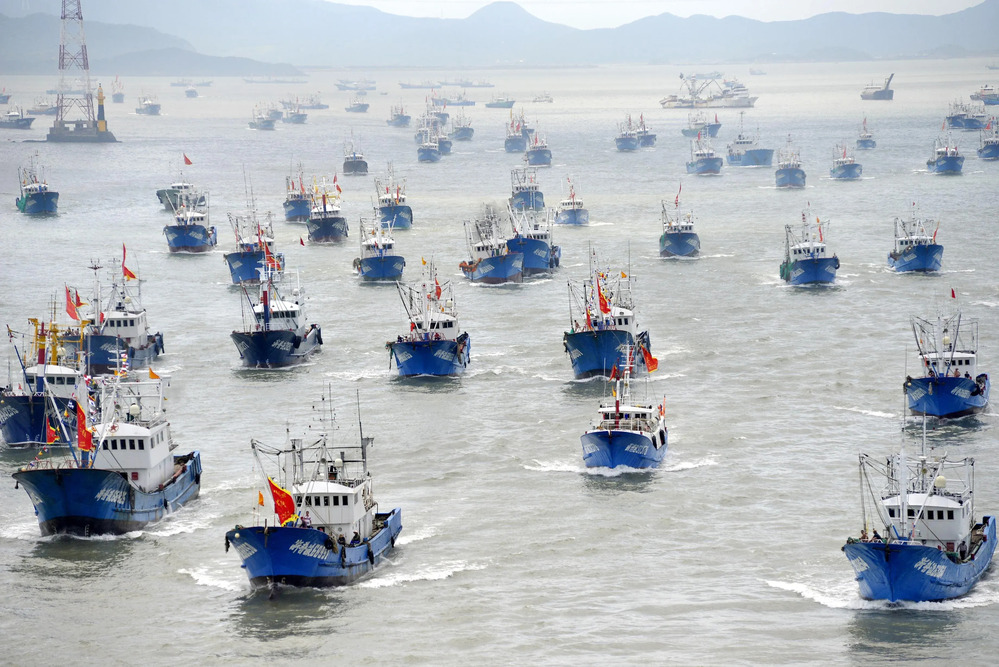
China’s gray-zone tactics—combining the installation and utilization of artificial structures, the permanent deployment of coast guard vessels, and the activities of maritime militias linked to fishing fleets—are intended to gradually constrain South Korea’s exercise of maritime jurisdiction and to narrow its range of response options. How, then, should South Korea respond to these tactics at a fundamental level? I argue that the first and most critical step is a shift in perception: South Korea must view the Yellow Sea as part of the Indo-Pacific maritime domain and recognize that it is directly linked not only to South Korea’s own security, but also to the maritime security of democratic partners across the Indo-Pacific, including its ally the U.S., European partners, and the IP4 (Indo-Pacific Four) countries.
A Perceptual Shift on the Yellow Sea and Its Linkage to the Indo-Pacific Strategy
To date, South Korea has sought to prevent jurisdictional and influence competition with China in the Yellow Sea from escalating into armed conflict by prioritizing coast guard–centered on-site responses over full naval engagement, raising issues through international maritime law and diplomatic channels, and managing the normalization of China’s gray-zone tactics—such as coast guard activities, artificial structures, and maritime militias—through maritime domain awareness (MDA) information sharing with the U.S. and Indo-Pacific partners. South Korea has perceived the Yellow Sea as a “strategic competition space that must be managed while avoiding direct confrontation with China,” pursuing a combined strategy of deterrence, management, and information superiority in coordination with the U.S.
However, as China’s gray-zone activities in the Yellow Sea are likely to continue to intensify and become more repetitive, South Korea must adopt a more forward-looking perspective by recognizing the Yellow Sea as an “Indo-Pacific maritime space.” China now regards the Yellow Sea as a strategic buffer zone designed to constrain the U.S.–ROK alliance, U.S. Forces Korea, and access by U.S. strategic assets, while steadily accumulating influence through incremental and non-military means. Under these circumstances, the more the Yellow Sea is treated as a narrowly bilateral issue between South Korea and China, the easier it becomes for China to deploy gray-zone tactics within a bilateral framework, while South Korea’s diplomatic and military response options are inevitably constrained. Given that the essence of gray-zone strategy lies not in immediate confrontation but in the gradual accumulation of normalized faits accomplis, an approach centered on conventional dispute management risks unintentionally acquiescing to changes in the status quo. Accordingly, South Korea should actively define the Yellow Sea as part of the Indo-Pacific maritime order and reframe it as a strategic space within its Indo-Pacific strategy. Defining the Yellow Sea as part of the Indo-Pacific maritime domain does not represent an attempt to artificially expand South Korea’s security scope; rather, it reflects a necessary adjustment of the conceptual framework for response in light of the reality that North Korea and China already utilize the Indo-Pacific maritime domain as a strategic space.
Building a Rules-Based Yellow Sea–Indo-Pacific Maritime Order with Like-Minded States
South Korea should pursue a strategy that rapidly advances its interests and influence across the Indo-Pacific—beyond the Yellow Sea—through diverse forms of information cooperation and combined space–maritime security operations with its ally, the U.S. This perceptual shift enables the actions of China in the Yellow Sea to be reframed not as “provocations against South Korea,” but as challenges to a rules-based maritime order. In this framing, threats to security in the Yellow Sea become synonymous with challenges to Indo-Pacific maritime security, transforming South Korea’s responses from a purely domestic concern into an international issue while simultaneously strengthening their legitimacy.
Viewing the Yellow Sea as part of the Indo-Pacific maritime domain provides a logical framework that both the U.S. and the EU can readily accept. From the U.S. perspective, recognizing the Yellow Sea as an Indo-Pacific maritime space allows China’s gray-zone tactics there to be identified as a vulnerable link requiring early management, similar to the South China Sea or the Taiwan Strait. Moreover, ROK–U.S. cooperation in ISR, MDA, and the space and cyber domains can be understood not as an excessive expansion of alliance roles, but as a conceptual reinforcement of functions already being performed.
For the EU, China’s norm-avoidant behavior in the Yellow Sea as issues of maritime governance and the erosion of international norms provides a rationale for engagement not as a military actor, but as a guardian of norms and a stabilizer of order. The EU’s concern that the collapse of rules in small, semi-enclosed seas can ultimately spread to the open oceans aligns naturally with an Indo-Pacific framing of the Yellow Sea. Especially around 2025, as both the U.S. and the EU transition their Indo-Pacific strategies from declaratory postures to implementation phases, and as South Korea reaches a position where it can make substantive contributions in maritime, space, and information capabilities, failure to clearly integrate the Yellow Sea into the Indo-Pacific strategic framework risks the governance vacuum being interpreted by the international community as de facto acquiescence.
Ultimately, defining the Yellow Sea as part of the Indo-Pacific maritime domain is not a confrontational choice aimed directly at China, but rather a preventive and pragmatic strategic shift designed to block the erosion of a rules-based order by gray-zone tactics at an early stage, while preserving South Korea’s initiative and strategic options in responding to developments in the Yellow Sea. This approach also provides a critical foundation for the U.S., Europe, and the IP4 countries—Japan, Australia, and New Zealand—to cooperate with South Korea in maritime and space operations, as well as in diverse forms of maritime and space-based information sharing across the Indo-Pacific.
Looking ahead, South Korea can further expand opportunities for cooperation not only with its ally the U.S., but also with the EU and IP4 countries in both maritime and space operations by leveraging its cyber, space, and ICT capabilities related to Indo-Pacific space and maritime security. By contributing alongside regional partners to responses to crises, accidents, and disasters occurring across the Indo-Pacific maritime domain, South Korea can elevate its standing from a participant in information sharing and a consumer of intelligence to a “rule-sharing partner,” and ultimately establish itself as a core partner in the architecture of Indo-Pacific security.
Dr. Tae-Eun SONG is an Assistant Professor in the Department of International Security and Unification Studies at the Korea National Diplomatic Academy (KNDA), Ministry of Foreign Affairs of the Republic of Korea. She holds a Ph.D. in International Relations from Seoul National University and a Master’s degree from the University of California, San Diego (UCSD). Professor Song currently serves as an advisory committee member for the R.O.K. Cyber Operations Command. She is the Research Director of both the Emerging Technologies and Cybersecurity Study Committee of the Korean Association of International Studies (KAIS), and the Cybersecurity Diplomacy Study Committee of the Korean Association of Cybersecurity Studies (KACS). Her research interests include cyber warfare, hybrid threats, information and cognitive warfare, emerging technologies, crisis management, and strategic communications. She has published numerous books and reports on emerging security issues, including “Cognitive Warfare: Psychological Tactics of Brain-Hacking” which was released recently. She is a recipient of military commendations from the R.O.K Army Training & Doctrine Command and R.O.K. Army Headquarters.