- #China
Key Takeaways:
- Using patrols, infrastructure-building and other grey-zone tactics, China seeks to exert greater control at sea
- Boundary-testing is the one logic behind open confrontation in the South China Sea and quieter pressure in the Yellow Sea
- By taking advantage of uneven state capacity, China imposes decisions that gradually undermine regional independence
The past year has witnessed a sea change in international politics. Developments that once appeared unthinkable, such as the US voting alongside China and Russia on the Ukraine file[1] or the Kremlin openly praising the recently unveiled US National Security Strategy[2], have become increasingly commonplace. Abrupt trade measures, shifting rhetoric, and public uncertainty about long-standing commitments have dominated headlines. These high-visibility foreign policy shocks do more than rattle alliance relationships; they also risk obscuring a more gradual, less visible shift taking place beneath the surface.
In an increasingly transactional global environment, trust has become a scarce commodity even among allies. Under these conditions, pressure does not disappear. It adapts. Boundary-testing becomes incremental, often normalised, and therefore easier to overlook. This dynamic is particularly visible at sea, where geography, law, and capacity shape how power is exercised in practice. China’s behaviour in the South China Sea and the Yellow Sea illustrates how the same long-term objective can be pursued in very different ways: overt and confrontational in one theatre, quieter and more ambiguous in another. Together, these patterns suggest a consistent grey-zone logic that adapts to context while appearing to serve the same underlying end goal.
The Loud Theatre: the South China Sea
The South China Sea (SCS) shows what boundary-testing looks like when it is concentrated, visible, and contested head-on. Vital trade routes and significant resource potential fuel overlapping claims among seven coastal states, creating a dense and highly politicised maritime environment. The sea is central to global commerce and holds significant hydrocarbon and fisheries potential. China frames its position through a combination of historical interpretation and legal argument, most notably its assertion of sovereignty within the so-called “nine-dash line.”[3] While Beijing continues to invoke international law, it rejects a 2016 arbitration ruling[4] that invalidated these claims and instead reasserts its position through official statements and white papers.[5]
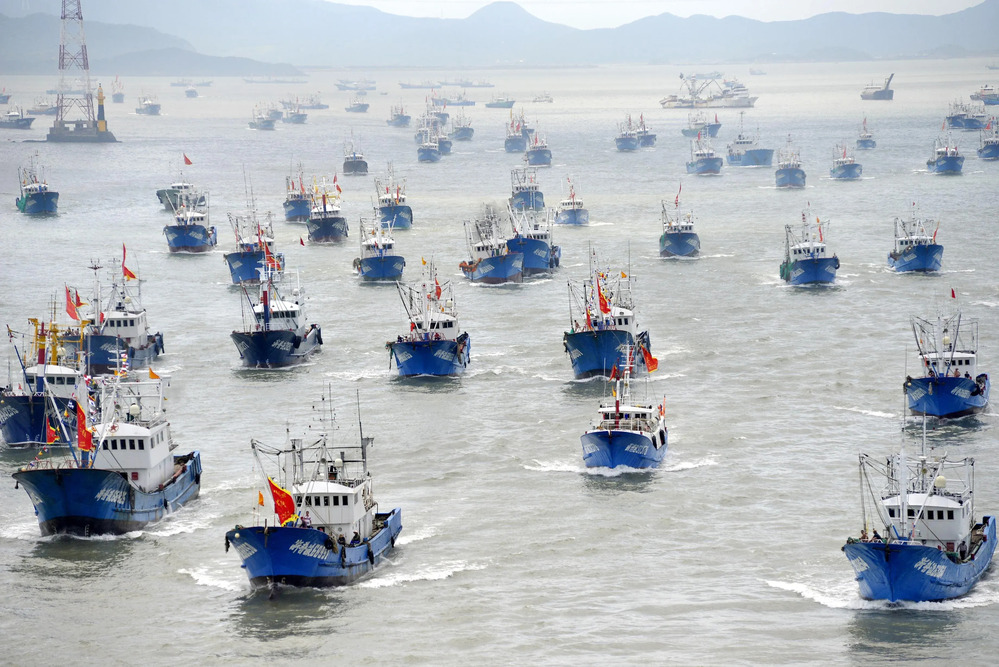
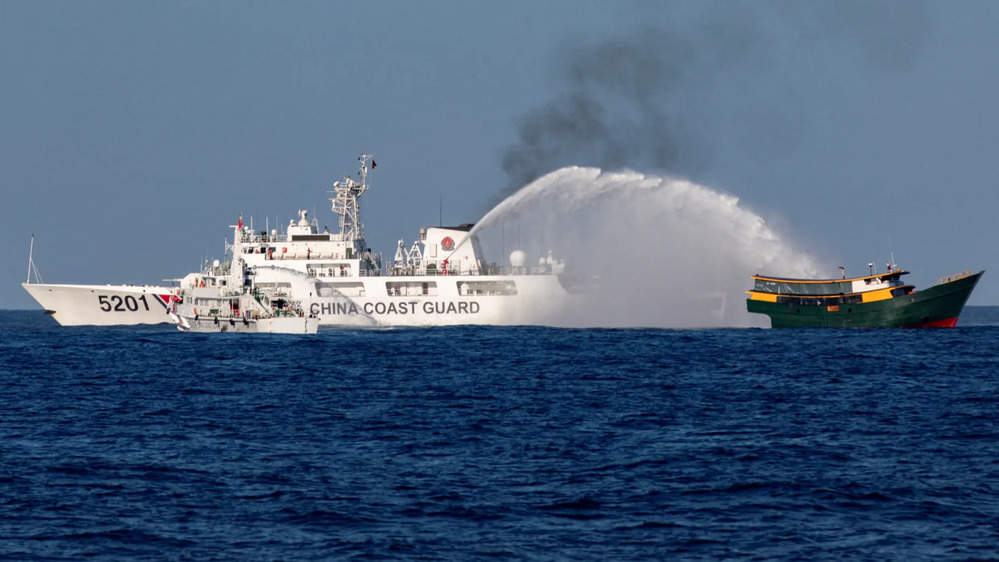
On the water, this posture translates into overt and sustained pressure. China has seized and fortified disputed features such as Mischief Reef and Scarborough Shoal, reclaimed large swathes of land, and deployed a persistent presence of naval, coast guard, and maritime militia vessels across contested areas. At times, large numbers of Chinese maritime militia boats have operated in Philippine-claimed waters, prompting regular patrols and public concern. Episodes of forceful interdiction continue: Chinese coast guard ships have used water cannons against Philippine vessels supporting fishermen near disputed shoals, injuring crew and damaging boats, while Beijing portrays such actions as lawful enforcement within its claimed jurisdiction.
These incidents are highly visible and politically difficult to ignore.[6] Yet Beijing maintains that its actions are lawful while accusing Manila of provocation and bad faith.[7] The result is a form of coercion that is loud, continuous, and escalatory by design. Other dynamics further complicate this environment. Overlapping state claims and practices (such as illegal fishing) and uneven state capacity make intent harder to interpret and create an environment that normalises facts on the water.
The Quieter Theatre: the Yellow Sea
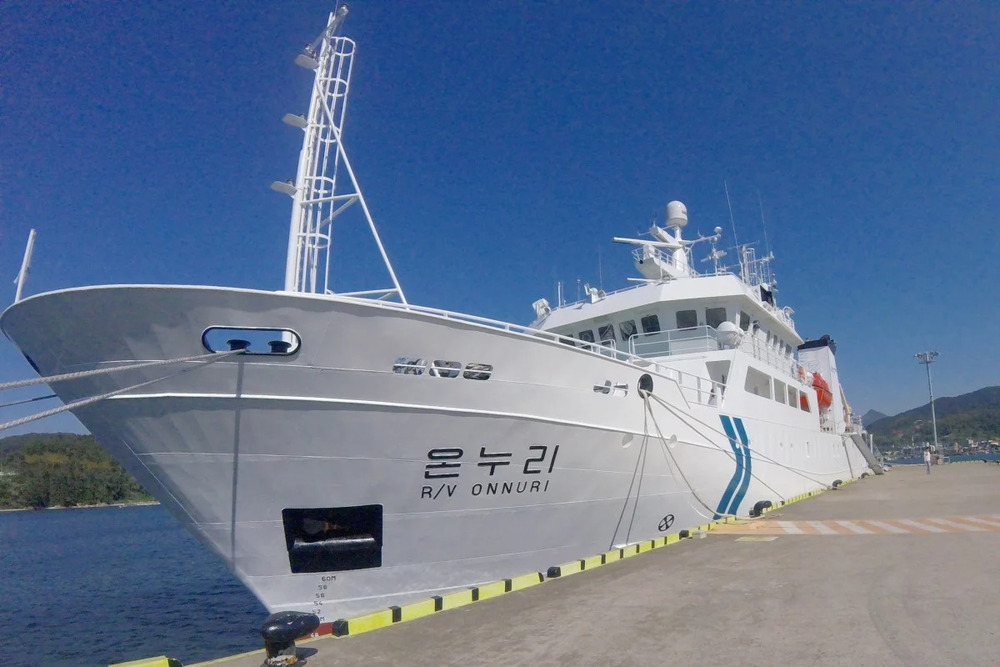
The Yellow Sea shows what boundary-testing looks like when it is dispersed, legally complex, and easier to absorb as routine. Unlike the SCS, it attracts far less public attention and is often described as comparatively stable. Yet its geography and political context tell a more complicated story. The Yellow Sea provides China and South Korea with access to the outer seas, hosts several of their naval command posts, and is governed by overlapping claims that are managed rather than resolved. These conditions make it less prone to open confrontation, but not necessarily less contested.
China does not claim territory in the Yellow Sea in the way it does in the SCS. Instead, it advances its position through operational and legal assertions. Beijing treats the Bohai Sea as internal waters and sets its effective operational boundary at the 124th meridian east. An arrangement South Korea has, in practice, largely accommodated despite never formally endorsing it. Since 2001, the two countries have managed overlapping exclusive economic zones (EEZ) through a Provisional Measures Zone (PMZ) supported by technical consultations and periodic dialogue.[8] On the surface, these mechanisms appear to moderate tensions and preserve stability.
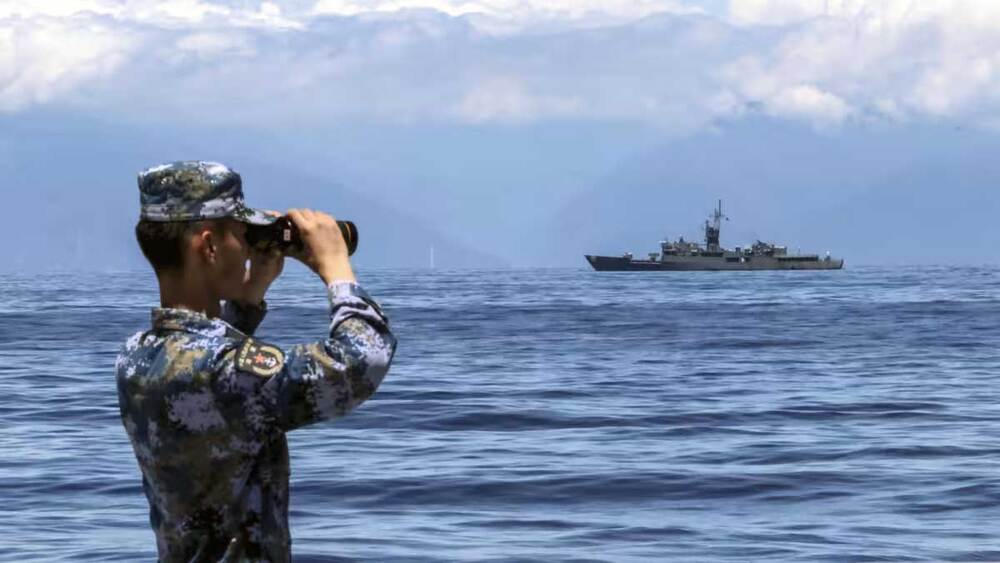
Within this framework, however, pressure is applied in quieter ways. Beijing has announced no-sail zones[9] and established facilities inside areas that Seoul views as sensitive, prompting debate over dual use and strategic intent. Chinese naval and coast guard vessels increasingly cross the PMZ into South Korea’s recognised EEZ[10], while patrols and surveillance flights have multiplied near the 124th meridian. Routine shadowing of Korean vessels restricts operational freedom without triggering crisis. Throughout, China’s rhetoric remains measured and de-escalatory, emphasising cooperation and parity rather than accusation. In other words, in the Yellow Sea, this type of boundary-testing is calibrated to fit within existing arrangements, allowing pressure to accumulate without ever clearly breaking them.
When Control Becomes Routine
Regardless of how boundary-testing happens, the bigger issue is what follows once control becomes normalised: governance of that space begins to shift, with real implications. Governance in this context does not mean formal sovereignty or new institutions, but the accumulation of everyday decisions about access, monitoring, and acceptable behaviour. When one actor is consistently present and rarely, or with difficulty, challenged, decisions become shaped less by formal rules than by practice on the water. Over time, routine activity gives way to mission creep. The type that does not necessarily trigger crisis but instead quietly influences how contested maritime spaces are managed in practice.
This dynamic is most evident in domains where governance frameworks are weak or incomplete. Critical maritime infrastructure provides a useful illustration. Subsea data and communications cables which carry over 95 percent of global digital traffic and underpin financial systems, defence networks, and civilian communications, run through waters that are increasingly subject to sustained control yet remain poorly regulated and politically contested. Disruptions to undersea cables elsewhere[11] have underscored how vulnerable these assets can be, and how geopolitical rivalry can complicate repair, access, and protection. Decisions about routing, maintenance, and incident response are often treated as technical or commercial matters. In practice, they depend heavily on the surrounding security environment and the actors exercising day-to-day control. As presence becomes routine, influence over these decisions follows less through formal rule-making than through who controls the space on the water.
For many regional actors, such arrangements are tolerated not because they are preferred, but because they are manageable. Or to put it simply, less complicated than the alternative. Capacity constraints, economic dependencies, and the desire to avoid escalation all incentivise accommodation over confrontation. In this context, ambiguity becomes functional, allowing pressure to persist and become normalised without forcing clearcut confrontation. Yet the absence of open warfare should not be mistaken for the absence of consequence.
Conclusion
The contrast between the South China Sea and the Yellow Sea illustrates how pressure adapts to context, and how sustained control can advance without dramatic confrontation. The danger lies not only in what is loud, but in what becomes routine. In a period when alliance relationships are under strain and attention is taken up by headlines, these incremental shifts are easier to misread. Yet it is precisely in such spaces that long-term consequences accumulate. For allies and partners, this means judging deterrence not by the absence of crises, but by whether space for independent action is shrinking because of what gradually comes to be accepted as normal or routine.
[1] Landale, J. and Jackson, P., ‘US sides with Russia in UN resolutions on Ukraine’, BBC, 25 February 2025 (https://www.bbc.com/news/articles/c7435pnle0go).
[2] Muller-Heyndyk, R., ‘New US security strategy aligns with Russia's vision, Moscow says’, BBC, 7 December 2025 (https://www.bbc.com/news/articles/cpvd01g2kwwo).
[3] Hayton, B., The South China Sea: Historical and legal background, Council on Geostrategy, September 2024 (https://www.geostrategy.org.uk/app/uploads/2024/09/No.-2024_27-%E2%80%93-The-South-China-Sea_-Historical-and-legal-background.pdf).
[4] Permanent Court of Arbitration, ‘The South China Sea Arbitration (The Republic of Philippines v. The People's Republic of China)’, n.d. (https://pca-cpa.org/en/cases/7/).
[5] State Council Information Office of China, ‘China Adheres to the Position of Settling Through Negotiation the Relevant Disputes Between China and the Philippines in the South China Sea’, 13 July 2016 (http://english.scio.gov.cn/whitepapers/2016-07/13/content_40535895.htm).
[6] Delegation of the European Union to the Philippines, ‘South China Sea: Statement by the Spokesperson on the recent dangerous actions’, 15 December 2025 (https://www.eeas.europa.eu/eeas/south-china-sea-statement-spokesperson-recent-dangerous-actions_en?s=176).
[7] Bodeen, C., ‘For First Time, China Publicizes Alleged 2016 South China Sea Agreement With Philippines’, The Diplomat, 4 May 2024 (https://thediplomat.com/2024/05/for-first-time-china-publicizes-alleged-2016-south-china-sea-agreement-with-philippines/).
[8] Asia Maritime Transparency Initiative, ‘Chinese Platforms in the Yellow Sea’s South Korea-China PMZ’, Center for Strategic and International Studies, 23 June 2025 (https://amti.csis.org/chinese-platforms-in-the-yellow-seas-south-korea-china-pmz/); and Da-gyum, J., ‘Seoul, Beijing to discuss China's unilateral construction in joint maritime zone’, The Korea Herald, 22 April 2025 (https://www.koreaherald.com/article/10471214).
[9] Zhuo, C., ‘Navigation Warning: Military missions to be conducted in Bohai Sea, Yellow Sea’, China Military Online, 5 August 2025 (http://eng.chinamil.com.cn/CHINA_209163/TopStories_209189/16400786.html
).
[10] Suk-jo, R. and Jung-soo, L., ‘Exclusive: Chinese warships cross into S. Korea's EEZ over 330 times in 2024’, The Chosun Daily, 30 April 2025 (https://www.chosun.com/english/national-en/2025/04/30/3WTFPYSJD5C5FMNYGVLLDK5MJU/).
[11] Financial Times, ‘Finland charges captain of Russian ‘shadow fleet’ ship over cable cutting’, 11 August 2025 (https://www.ft.com/content/a3110e00-9d4d-4757-9066-7af0ec925b42).
Lizza Bomassi is the Research Analyst for the Indo-Pacific at the European Union Institute for Security Studies (EUISS), where she focuses on European foreign policy and geopolitical developments in the region. With a background in communications and development, Lizza previously held a senior management position at Carnegie Europe, contributed to founding an International Task Force on Preventive Diplomacy and worked for the Save the Children in Afghanistan and Pakistan. Laura Catherine Remy is the Trainee for the Indo-Pacific at the EUISS, where she contributes to research on geopolitical issues and event organisation. A former linguist for the United Nations and other multilateral organisations, Laura Catherine graduated from Sogang University with a Master’s in International Relations focused on East Asia. Her interests include conflict prevention, governance and European-Asian relations.